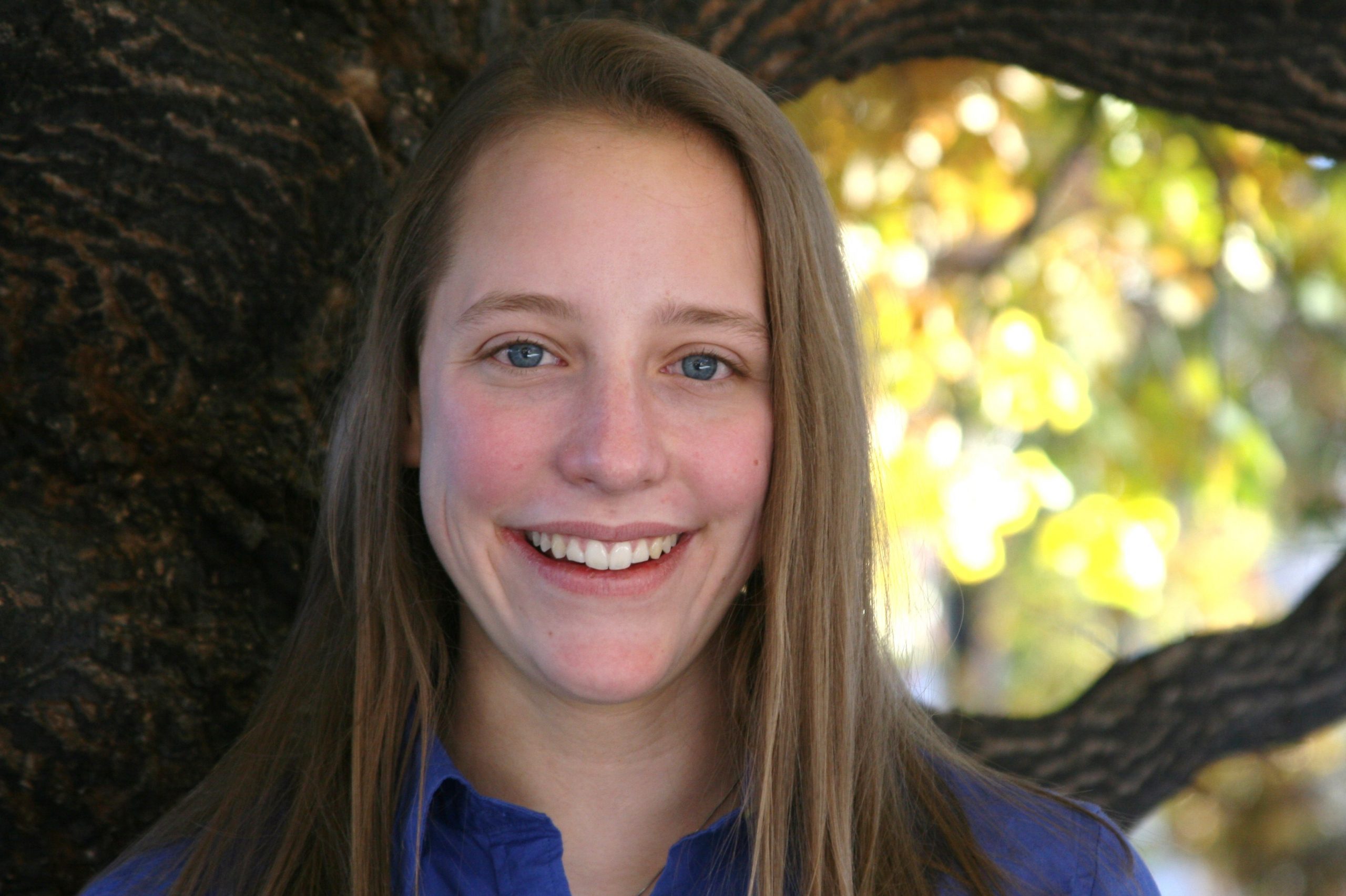
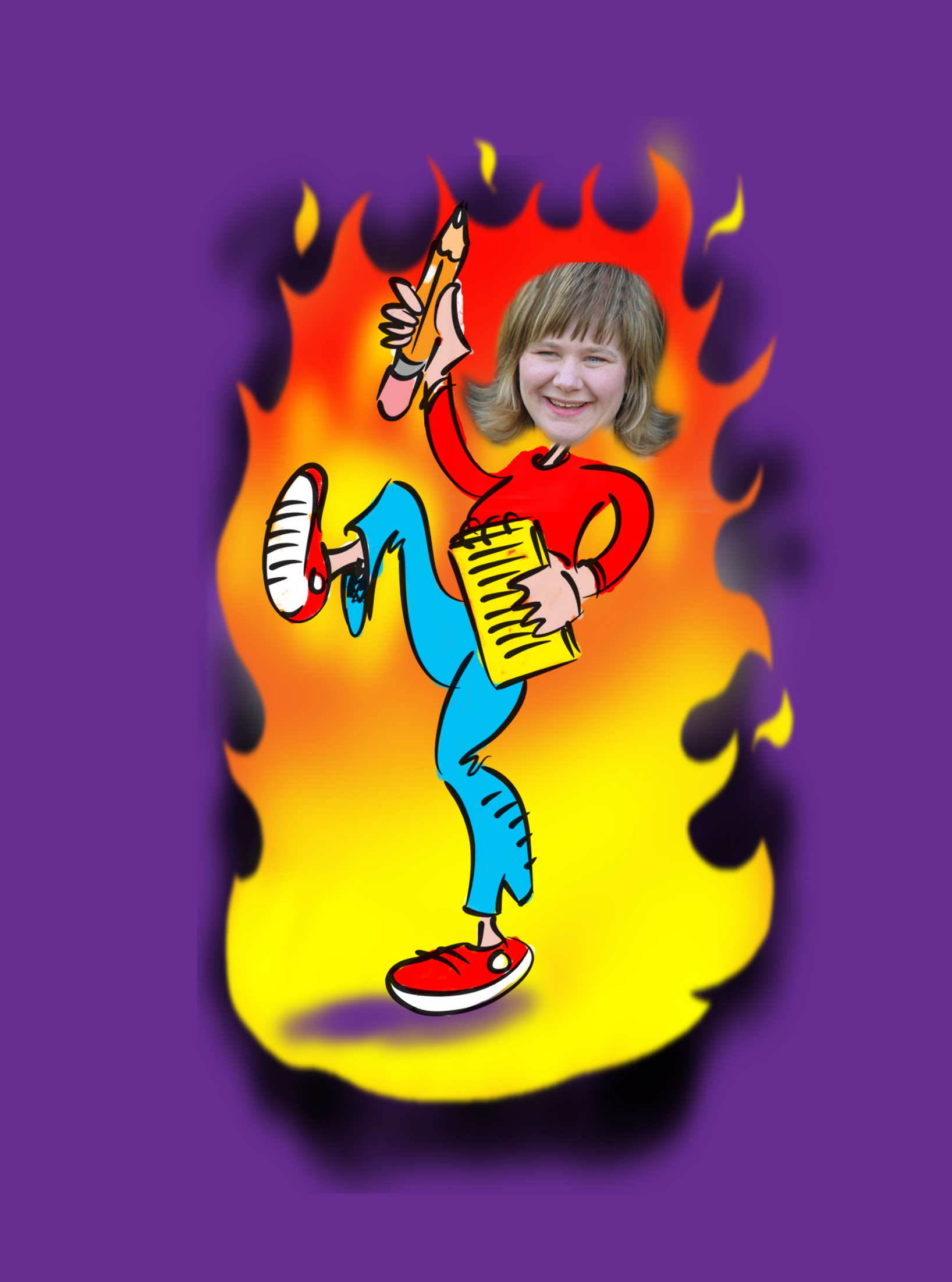
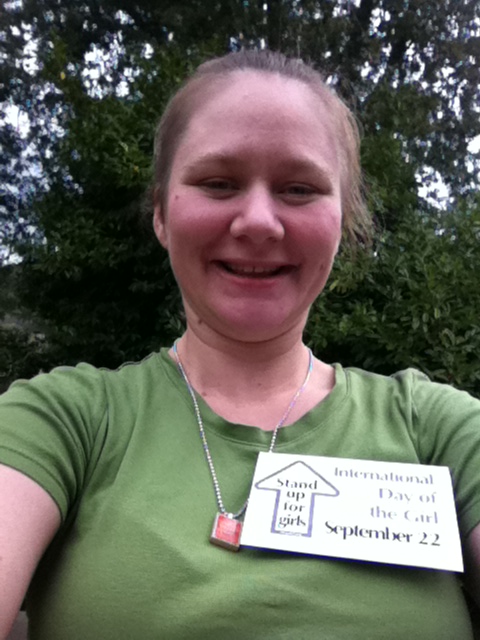
Today, I took part in the Rally for Girls’ Education by standing up for girls! Did you know that two thirds of the world’s illiterate people are women? Don’t you think every girl has the right to read and write words that will change her, and to write and tell stories to change the world? I do! Here’s me standing up at noon today:
To find out more, visit LitWorld’s web page, and be sure to read this compelling article from the Huffington Post:
It has been demonstrated over and over again that women’s wisdom feeds families and communities and environments, making them healthier, stronger, more resilient and less tendentious. Educated women live longer, earn more and have healthier, better educated children. It seems a no-brainer: investing in women and women-to-be is one of the most efficient expenditures possible.
Tomorrow is a big day. First, my son will be having his first soccer game of the season with his brand new team. Go Eagles!
At the same time, I’ll be walking with my daughter in the Walk to End Alzheimer’s. (If you’re so inclined, there’s still time to support me here!) We’re honored and excited to be a part of Team Teri Atteberry and looking forward to an inspirational morning in the late summer sun.
Then, we’re rushing back across the water to go to TEDxRedmond all afternoon. I love listening to the real TED talks on http://www.ted.com/. But imagine my surprise and delight when I learned about TEDxRedmond–a TEDx event organized by youth, for youth–right in my backyard! How had I not heard about this before? I don’t know, but I can’t wait to attend this year.
From their web page:
After speaking at the annual TED conference in Long Beach, CA, in 2010, 12-year-old teacher, speaker, and author Adora Svitak wanted to bring a TED-like experience home to Redmond, WA.
And she’s done it! I’m thrilled to be one of the supporters of this year’s TEDxRedmond, and I’m looking forward to meeting this young dynamo. Check out her TED speech:
Here’s a list of all the speakers joining Adora at TEDxRedmond 2011. I can’t wait to hear what these young people have to say!
Finally, the whole family is meeting up with friends, including one visiting from afar for the first time in years, for dinner. It’s hard to imagine a fuller, or more rewarding, day. I just hope I have some energy left to tell you about it afterwards!
I’m still pinching myself about signing with Ammi-Joan Paquette at Erin Murphy Literary Agency. I’ve always known Joan and Erin are amazing, but I wasn’t expecting the close-knit, ultra-supportive group of EMLA clients who totally sweeten the pot. I set about trying to read all of their books and was thrilled to discover fellow nonfiction (and fiction!) author Audrey Vernick. I knew I wanted to get to know her better as well as pick her brain a little, so I’m excited to be the 3rd stop on her summer 2011 blog tour!
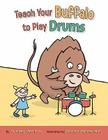
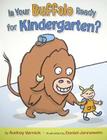
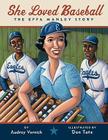
Audrey Vernick Laurie: Welcome, Audrey! Thanks for stopping by. Your first book, IS YOUR BUFFALO READY FOR KINDERGARTEN, was a light-hearted, hilariously funny book for the preschool set. Your second, SHE LOVED BASEBALL: THE EFFA MANLEY STORY, was a serious, passionate picture book biography. Now, here we are celebrating your return to young fiction with the release of TEACH YOUR BUFFALO TO PLAY DRUMS. (Congratulations!)
Laurie: One of the things that jumps out at me about all of your books is what a strong and unique voice they have, yet they’re totally different! As authors, we’re told, and often struggle, to find our own one true voice… but you’ve found two! How did you develop them? How do you switch back and forth between your BUFFALO voice and your nonfiction voice?
Audrey: I struggled with this question, because before I was published, I found it maddening the way people, especially editors, talked about voice. “It’s hard to define, but I know it when I see it.” THAT IS NOT HELPFUL! I want to give an informative answer, but the truth is that voice is the one part of the writing process that’s just there for me. I’m not at all conscious of developing voice or switching between voices. I write and it’s there.
Audrey: But as I think more about it, my brain keeps me pulling me back to the truly dreadful picture books I used to write, which had no voice at all. Before writing for kids, I wrote literary short fiction for adults (which makes writing for kids seem like a lucrative business decision). My voice was always in the short stories, but it did take me some time to get it into my children’s writing. A lot of time, actually. Something clicked into place with the buffalo books, and the best explanation I can give is that I learned to get out of my own way. I used to waste a lot of my narrative space explaining the world I created and why characters acted as they did. Now I state it and move on. And that, somehow, cleared out the room my voice had been waiting for.
Audrey: Lately I’ve been thinking a lot about voice in nonfiction. I really admire some voice-heavy nonfiction books, and I’m playing around with that, at least in my head, for the nonfiction project I’ve been working on for years. The examples that come to mind are both baseball books–Kadir Nelson’s WE ARE THE SHIP, about as perfect as a book could be (though maybe more for adult readers of children’s books than for children), and the wonderful YOU NEVER HEARD OF SANDY KOUFAX? by Jonah Winter (illustrated by Andre Carrilho). Those books deliver on three fronts, where I was only expecting two–information about a subject in which I was interested, gorgeous art, and the bonus: a really interesting voice to tell the story. Laurie: You also have a novel coming out this fall. How did you find that voice, and how is it like or unlike the two we’ve already seen?
Audrey: The voice in WATER BALLOON is truest to… me. To who I am. Not necessarily who I was at thirteen, the age of the book’s narrator/protagonist, but who I am now, distilled back to a younger age.
Audrey: I started this book seven years ago and the voice was the exact same in the first sentence of the first draft as it was when I completed the final revision. But man alive, did I need to work on plot. If my characters had their way, they would lounge and emote for 300 pages. Laurie: Another multi-talented author of both fiction and nonfiction (and fellow EMLA client) Chris Barton wrote in a guest post on Rasco from RIF, “I slide back and forth between fiction and nonfiction without really thinking much about it, my experiences with one building on the other. I suspect the youngest readers approach the two genres pretty much the same way—when you’ve explored only a smidge of the world, all books are about exploring more of it. It’s as we get older, as both readers and writers, that our tastes divide.” Laurie: I guess, for some of us, our tastes never did divide. (Perhaps because we never grew up?) Do you have a preference? Which creative process do you enjoy more: fiction or nonfiction?
Audrey: I think writing funny comes more naturally and is more fun. Writing nonfiction is harder. But sometimes there’s a greater satisfaction in successfully completing a difficult task. And I feel something that’s found at the crossroads of pride and delight at sharing someone else’s story with a wide audience.
Audrey: I wouldn’t say I’m drawn to nonfiction as a whole, though. Some individual stories just call me. And while it’s obvious that some of them are baseball–in the case of my first book, BARK & TIM, it was a painting. I have likened seeing Tim Brown’s painting to the human-interest story I once read about a woman who saw a news story about an orphan in another country and had this immediate, strong knowledge: That’s my son. It was that strong when I saw “Feeding Bark.” That’s MY painting. My art. My story. For the playful, fiction books, I’m simply drawn in by the strong pull/desire to write something funny. Laurie: Chris also wrote, “based on my own experiences slipping back and forth between genres, I believe they might even find inspiration for their next fiction project.” Laurie: Do you also find that one informs the other? Do you need to do both to stay balanced? Where do you pull such different ideas from? Do you think they come from the same place somehow?
Audrey: Both kinds of stories—fiction and nonfiction—call to me. I don’t go seeking story ideas. I find myself wondering about something or someone (nonfiction) and wanting to explore to find out more. Usually in the case of fiction picture books, I say something, though sometimes I just think it, and it echoes until I start looking at it for story potential. The closest I’ve come to one informing the other was when reading a particular kind of nonfiction picture book—the spate of inter-species friendship books—led to writing a fiction spoof of the genre, the upcoming BOGART & VINNIE. Laurie: Do you tend to work on fiction projects and nonfiction projects at the same time? Or do you keep them completely separate?
Audrey: I work on them simultaneously. I don’t have any trouble switching gears, for the most part. Laurie: How is your process different for something like TEACH YOUR BUFFALO TO PLAY DRUMS and SHE LOVED BASEBALL?
Audrey: I just need an idea to start writing fiction picture books. A title, a premise, a character–those have all been my starting points for different fiction picture books. For nonfiction, I need a lot of information. I need interviews, background information, etc. And I need time for the story to boil down enough that I can envision an opening scene, where an opening scene almost always naturally emerges for me when writing fiction picture books.
Audrey: When I get stuck writing nonfiction, it’s usually a good hint that I need to do more research. When I’m stuck writing fiction, it’s kind of my own problem to fix. After waiting a few days to see if an answer comes to me, I’ll sometimes try to sit down and write five possible ways out. This usually works. One thing I’ve done when stuck writing both fiction and nonfiction, with success, is talk it through with smart people.
Audrey: The editing process is similar in that both are almost always about stripping away to find the essential story. With nonfiction, it’s wrenching, because you’re cutting away parts of a life. I still mourn for a scene in SHE LOVED BASEBALL. I find it more satisfying with fiction, because for me, my humor usually comes through best when it’s in a stark, brief form. But that’s not how I write it–that happens in revision.
Laurie: What are you working on now?
Audrey: I am revising a recently acquired picture book entitled BOGART & VINNIE, A COMPLETELY MADE-UP STORY OF TRUE FRIENDSHIP. I find myself in the new-to-me situation of turning a character from a potbellied pig into a rhinoceros.
Audrey: I’m also planning to start a new upper middle-grade novel this summer, which scares me more than any other kind of writing. Novels are so consuming and, for me, really hard! I know a lot about my main character and her situation, about where she starts and where she’ll end up, but getting her to move and do things has proven to be a challenge.
Audrey: Mixed in there are a couple of other picture book projects–mostly fiction, with one nonfiction–that I return to every now and then. And one new one that’s just starting to scratch its way to the surface. Laurie: What do you most want people to know about you as an author and as a person?
Audrey: That is a big question.
Audrey: I’m a big reader. The moments I love best as a reader are the ones that make me laugh, or the ones I HAVE to read aloud or paste into an email for someone else whom I know will get it exactly as I do, or stumbling upon phrasing that pleases me to my core. Most recently, it was this sentence in Ann Patchett’s STATE OF WONDER, when a character receives bad news: “There was inside of her a very modest physical collapse, not a faint but a sort of folding, as if she were an extension ruler and her ankles and knees and hips were all being brought together at closer angles.” It’s not an especially important moment in the book, but those words evoked something in me. I reread them several times, with great satisfaction and pleasure.
Audrey: As a writer, I don’t think there’s any way to consciously strive for such moments in our own writing. But I think that’s why I write–in the hope that I might provide that kind of moment for a reader.
Audrey: As a person, boy that’s hard. When my sisters and I describe people, we always find ourselves falling upon the same rubric of funny, smart, and nice. They claim they haven’t, but I believe they have, more than once, subtly suggested that I might want to work a bit on the nice part. I am a strange combination of misanthrope and someone exceedingly fond of and loyal to the core of people I adore. Laurie: Thanks so much, Audrey! I can’t wait to see TEACH YOUR BUFFALO TO PLAY DRUMS and all of your other upcoming projects.
Read on about Audrey, the buffalo, and more on the rest of her summer 2011 blog tour:
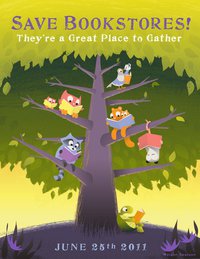
We had an all too rare sunny summer day yesterday, so the family and I walked to the library (mostly to drop off oodles of books), and then we went shopping at our local independend bookstore in honor of Save Bookstores Day. My daughter was consumed by a book we had just bought at the Friends of the Library used bookstore (hopefully that counts–save libraries, too!). My husband was consumed by afternoon nap and sunshine. So, the two of them sat outside together in the sun doing their things while the boy and I went into University Book Store. I love hanging out in there. They have a great children’s department!
After much deliberation (the boy is decision-impaired), we settled first on:
This nonfiction series published by Kingfisher (called the Basher series, after the common illustrator and creator) includes topics in science, math, the arts, and language arts, and each one we add to our collection holds both kids enthralled. Each one is a paper “Facebook” of what’s what in the given subject, treating each topic as a character and listing its behavior and vital statistics. They’re perfect for boys, because they feel like those game cards (Pokeman, Bakagan, Yu-Gi-Oh, and whatever else) with the stats, short descriptions, and fun art. They’re perfect for girls because they make abstract concepts characters, and suddenly we care about them (stereotypical, I know, but it sure works for my daughter and me). Highly recommended! I know our family will be buying many more.
This one is similar in feel to the ‑ology books from Candlewick, which he loves. A hit, and no nightmares. Yay!
Can I just pause to say how proud I am of my nonfiction-loving boy? *smile*
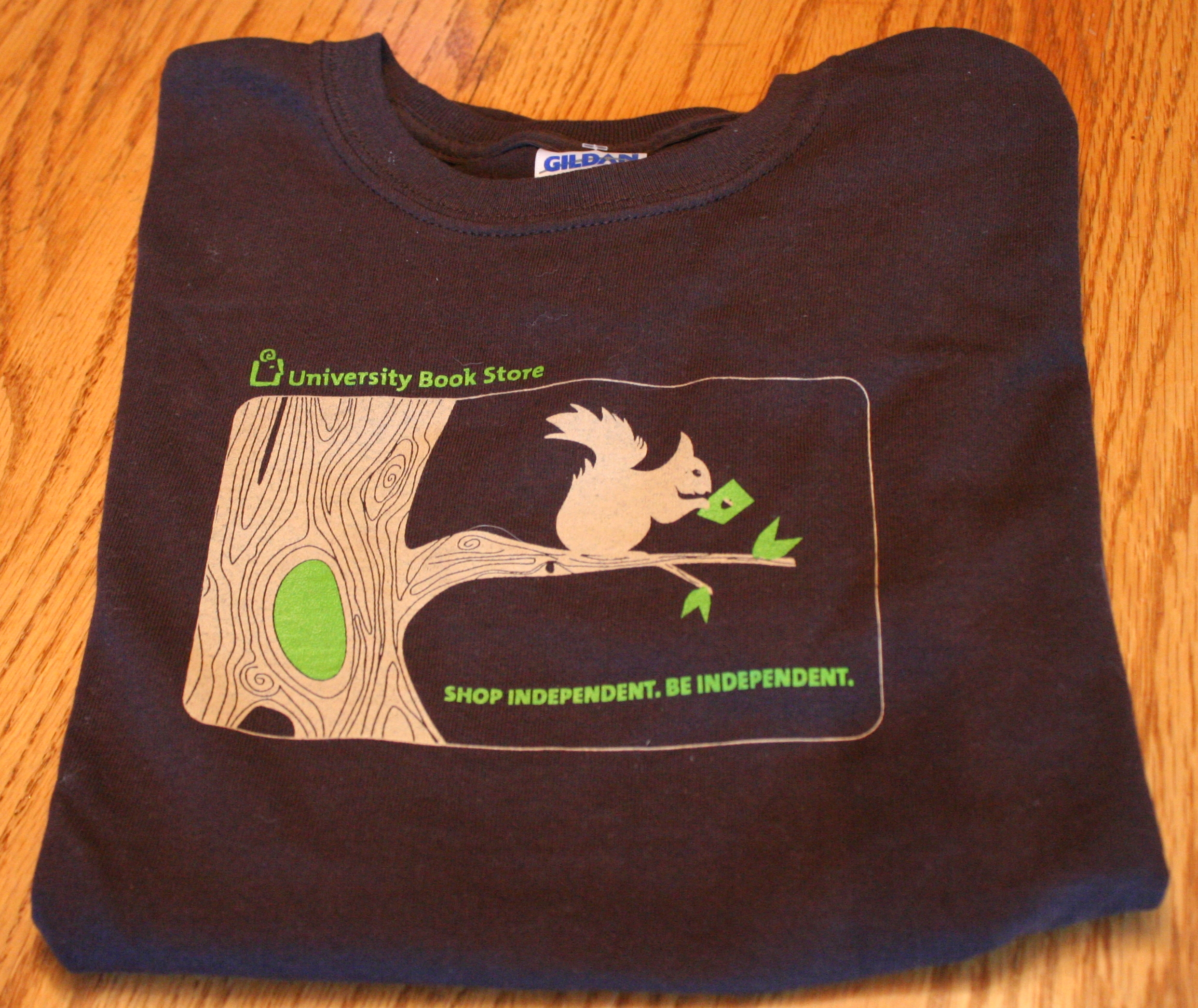
Finally, I bought myself this nifty shirt:
I think it’ll be perfect to where to KidLitCon in September, which I’m already signed up for. Are you?
The kids were too busy reading to walk back home again without face-planting somewhere along the way, so we all hopped on the bus back home.
Did you make it out for Save Bookstores Day? What did you buy?
I first met Riley Carney on Twitter. As you can see in her profile, she’s 18, has published 3 books (so far), and founded a nonprofit organization for children’s literacy. Pretty amazing, huh? I knew right away she was somebody I wanted to follow! Loads of other people do, too, so today we’re getting together to throw a SURPRISE Twitter graduation party for her! Everybody say,
“Happy Graduation, Riley!”
In just four years, Riley’s nonprofit has raised over $100,000 and built three schools and water purification systems for villages in Africa along with a children’s literacy center in a woman’s shelter in Colorado. Currently, they are focusing on their Bookin’It program, which is putting books into classrooms in low-literacy/underfunded schools in the United States. Riley donates some of the proceeds from her own books to the organization, also.
A true hero, Riley has won a number of national and local awards, including T.A. Barron’s Young Heroes Award Distinguished Finalist, Prudential Spirit of Community National Award for Colorado, NBC Colorado Affiliate 9News Kids Who Care, and Skipping Stones Multicultural Magazine Top Youth Writer Award, to name a few.
Despite being a published author, founder and CEO of Breaking the Chain, in-demand speaker, not to mention busy high-school senior, Riley was kind enough to answer some interview questions to tell us a little more about herself and her literacy organization, which fights right in with the youth empowerment theme of this blog! Laurie: Hi Riley! Thanks so much for playing along and sharing your wisdom and vision with us. First, how old were you when you launched your nonprofit? And how did you decide what problem or issue to address? Riley: When I was fourteen years old, I learned some startling statistics about children’s literacy: over 120 million children around the world are denied access to a basic education; 1.3 million children drop out of school each year in the U.S.; and 1 in every 2 children lives in poverty. I realized that there was a direct correlation between illiteracy and poverty. I wanted to do something to change those statistics, so I decided to start my own nonprofit organization, Breaking the Chain, to break the chains of illiteracy and poverty through education. Laurie:Who or what helped you figure out how to do it? Riley: When I first started Breaking the Chain, my initial goal was to build a school in Kenya. I partnered with an organization called Free the Children so that I could raise the money and they would build the school. They had many helpful fundraising tips that gave me ideas of how to raise money. My family and friends were very supportive from the very beginning, and I used my school as a way to raise awareness and funds. Laurie: What was the easiest aspect of launching and/or maintaining it? Riley: The easiest aspect was staying passionate about the cause. I deliver books to many classrooms in high-need middle and elementary schools and I often have the opportunity to speak with the students who receive the books. It is impossible to adequately convey the joy and excitement expressed by the children when they see the books. As soon as their teacher allows them to, they run to the boxes and grab as many books as they can to take back to their desks. They smile, they laugh, they dance around. It’s better than a birthday party. Often, they’ll ask if they can take a book home to keep. Many have never owned a book of their own. The need and the impact are so tangible, and the experience only drives me to do as much as I can to help. Laurie:What was the most challenging aspect of launching and/or maintaining it? Riley: Fundraising can be difficult and frustrating, especially during a recession. It’s difficult to secure a constant source of funds and it’s often challenging to find new ways of fundraising after other methods fall short. Laurie:What keeps you going when things get tough? Riley: I just remind myself of the children who we are helping and the impact that our efforts have on their lives. There is nothing more valuable that teaching a child how to read and the gift of education is a right that should be afforded to everyone. The ability to read profoundly affects every minute of our lives; literacy is the single-most important component of becoming a functioning adult. That knowledge propels me forward. Laurie: What do you feel like you, personally, have gained from being involved with it? What have you learned that you’ll take with you to your next phase of your life? Riley: Creating Breaking the Chain, maintaining our programs, and interacting with the kids has been an amazing and formative experience. I have learned so much about myself and I have been awed by the incredible optimism and enthusiasm of children in even the most difficult of situations. I am so grateful that I have had this experience and had the honor of meeting so many fantastic kids. Laurie: What would you say to other teens considering launching their own nonprofit? What do you wish someone had said to you when you were just starting out? Riley: You’re never too young to make a difference. When I first started my nonprofit, I was terrified that I would fail, that I would embarrass myself in front of my peers, but I realized that the only way I could make a difference in my own life or in someone else’s life is if I faced that fear of failure. Laurie: Thank you, Riley! I think your answers remind us all, youth and adults alike, to face that fear of failure and make a difference in whatever areas we feel passionate about. I know we’ll be hearing much more from you in the years to come, and I’m so looking forward to it. Congratulations on your graduation, Riley, and best wishes for a stellar future!
If you’d like to support Breaking the Chain (a 501(c)(3) organization), you can sends funds via PayPal to breakingthechain@linkbylink.org,
or mail donations to:
Breaking the Chain
P.O. Box 100644
Denver, CO 80250–0644
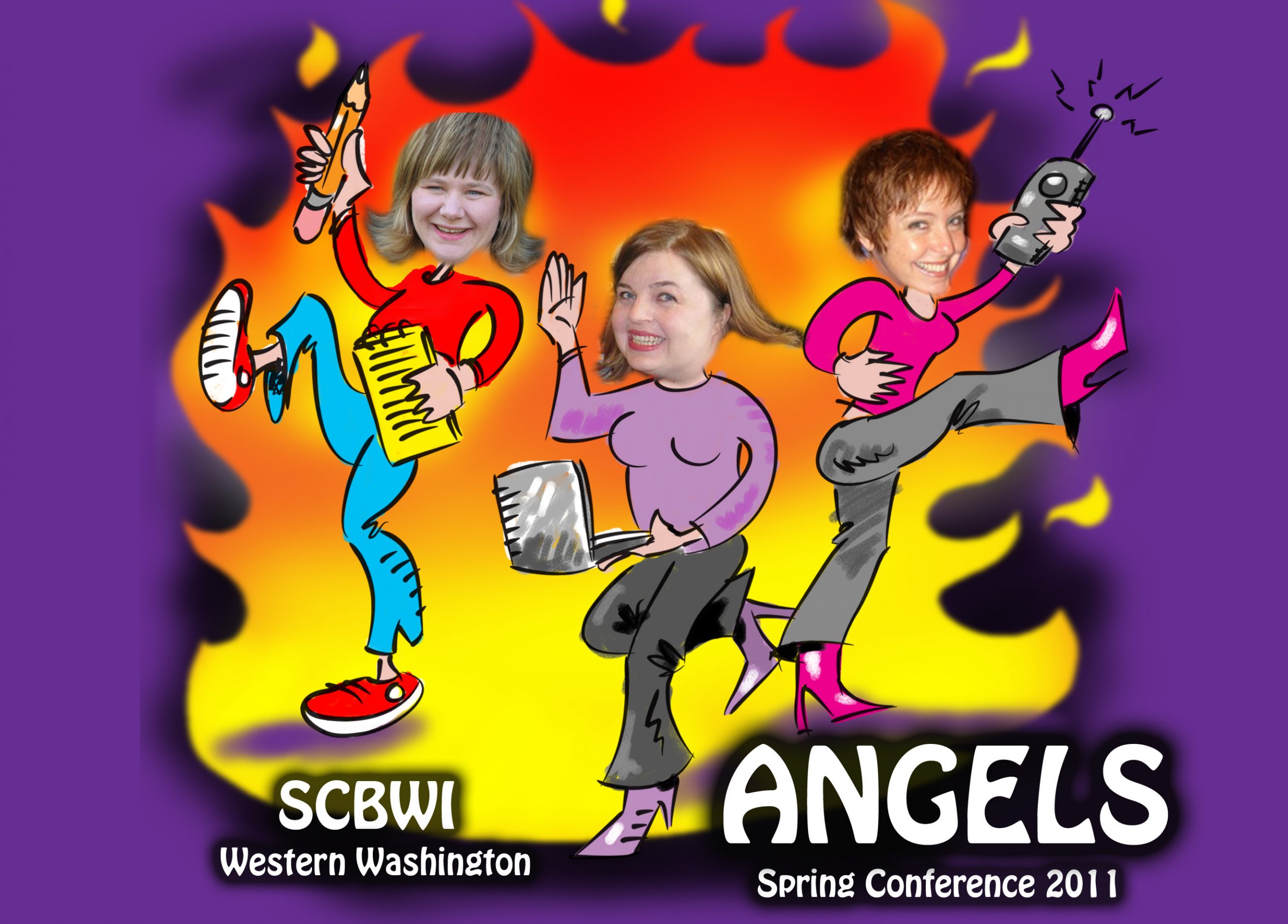
I didn’t think SCBWI Western Washington’s 2011 conference could get any better than it was on Saturday, but yes, it could! Sunday started a little later (thank goodness, after all that dancing!). On Sunday, April 17, we started out by celebrating our awesomely talented and dedicated advisory committee. And they celebrated us with a great big surprise presentation!
Copyright Dana Sullivan
Before we even had time to see what goodies they put together for us, we jumped right into gear with Dan Santat’s keynote. He not only gave a peek into the trajectory of his career so far (and trust me, it’s only going up, folks!), but he showed us that he, too, is indeed human. He made himself cry by showing us a picture of why he works so hard (his family), and he took the rest of us right along with him. 400 people wanted to give Dan a hug, but I think most of us settled for buying his books and becoming lifelong fans.
The local success story panel is always one of my favorites because 1) I usually know most of the people of the panel and love celebrating their successes, and 2) the stories are always so inspiring and leave us all feeling that someday, if we keep working hard, we could be up there telling our stories (about our stories). This year’s panel–featuring Carole Dagg, Caridad Ferrer, Liz Mills, Craig Orback, Wendy Wahman, Jesse Joshua Watson, and Jim Whiting–did not disappoint! From the 14-year labor-of-love personal-history novel to the 90-day start-to-finish topical and timely picture book (written AND illustrated by the same person!), these folks were all full of examples of the rewards that come from hard work and dedication.
Copyright Dana Sullivan
During lunch I finally had a chance to peek at the goodies from AdCom–HUGE MISTAKE! They had all written personal notes and messages inside the card (see awesome picture of the card front, above), and I totally teared up, again! We have such a great team, and I’m so thankful to work with each and every one of them. For them to go all out to thank ME reduced me to a blubbering mess. I finally pulled myself together enough to return to the ballroom, where I watched our awesome Assistant Regional Advisor, Kimberly Baker, open the thank you gift we got her. She burst into tears, so yeah, there I went AGAIN. Then, our Published Pro Liaison, Sara Easterly, presented our region’s first ever Lifetime Achievement Award to Peggy King Anderson. You can read Peggy’s take on it here, but we all know and love Peggy, so–yep, you guessed it–MORE tears!
Thank goodness the afternoon was jam-packed with information! First I went to Jim Whiting’s talk on Nonfiction Hooks. He had oodles of examples of revising to hook the write audience–with handouts! Then Jesse Joshua Watson talked about Writing for Change, with the inspiring story about how his book HOPE FOR HAITI came to be and organizations he has partnered with since (okay, I got a little teary here, too). Finally, the last breakout of the day for me was about authenticity, presented by agent Marietta Zacker. Marietta gave a brilliant talk illustrating the need to be absolutely true to yourself while still perfectly addressing your audience (yep, misty-eyed, sigh).
The rest, unfortunately, is a bit of a blur. But I know I ended the day on a total high–even before the foot massage and cocktails. 😉
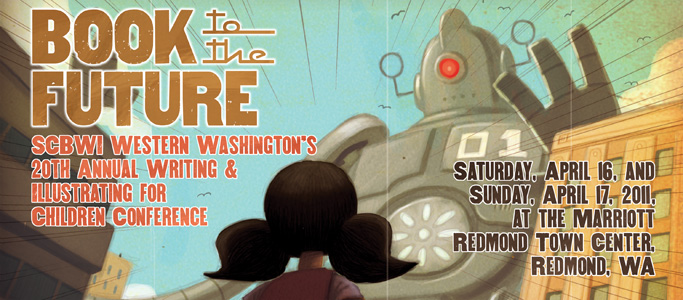
Yes, the SCBWI Western Washington’s 20th Annual Writing & Illustrating for Children conference was over a month ago. I’m finally coming down from the high that weekend always leaves me with–and recovering from the hard work and long hours that go into organizing it. So, I thought I’d share some of the high points (for me) here.
On Friday, April 15, 2011, I attended our first ever Nonfiction Intensive, presented by Lionel Bender, Editorial Director at Bender Richardson White (BRW) and Jim Whiting, author and freelance editor. They gave us a great over of work-for-hire nonfiction from initial concept all the way to promotion and reviews, with everything in between. Some of the key takeaways for me were:
Always ask for a style guide
Consider getting your own consultant to fact-check for you
Always think globally for the broadest appeal
In many highly graphical nonfiction titles, design and layout come first, with author fitting appropriate text into designated spaces.
Never submit a manuscript that is under the requested word count. Better to be over if necessary, but try to stay as close as possible!
Try not to use any sources more than 4–5 years old.
Saturday, we started out with the editor/agent/art director panel. I always love hearing a) optimistic, b) down-to-earth friendly, and c) similar these industry professionals are. Far the doom and gloom scenarios we hear so often (picture books are dead, ebooks are going to destroy the world, etc.), these people believe in the power of story, and the need for those who can deliver it. They’re human beings (and darn nice ones, usually, if they’re in children’s publishing). And they all want to find the same thing, a great book. Deborah Wiles gave one of the best keynotes I’ve ever heard. She’s a human being, too, and one of the most authentic and lovely ones I’ve had the pleasure of meeting. I was not the only one in the room dabbing my eyes and trying not to start the day with my makeup all a mess!
For Saturday’s afternoon breakout sessions, I first went to Lionel Bender’s “Working With a Book Packager.” Did you know most work-for-hire projects are published within about 6 months of when they are STARTED? I also went to Lionel’s “Visiting Book Fairs and Exhibitions.” I can’t wait until ALA midwinter is right here in Seattle in 2013! How great would it be to have a book to promote by then? I also learned about revision from the amazing Deborah Wiles in a stuffed-to-the-gills room. She analyzed some wonderful picture books for universal examples we should all try to emulate. Some of her tips included:
Every good story has a surprise–the end isn’t really the end.
Stick with NOUNS and VERBS!
Incorporate both contrasts and echoes.
Every emotion has an ACTION. What does it LOOK like? Show, don’t tell.
“The better you know your own story, the better writer you will be.”
Make and keep lists!
Saturday night we ate, drank, and danced the night away with both the faculty and the attendees. Ah, could it get any better?
I’ll answer that in the next blog post!
You may remember back in February when I reviewed TOM THUMB: THE REMARKABLE TRUE STORY OF A MAN IN MINIATURE by George Sullivan.
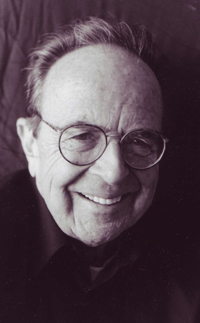
Sullivan has written more than 100 nonfiction books for children and young adults, and he was kind enough to email me directly after the review! Isn’t that sweet? I was so tickled, I decided to take advantage of the situation to ask him a few questions and get to know him a little better. And he agreed to let me share his answers with you, so you can get to know him better, too!
LT: At this point in your career, what does a typical workday look like ? GS: I’ve always done my writing early in the morning, beginning at least by 5:30 am, and continuing until my wife and I have breakfast around 8:30 or so. After breakfast, I put what I’ve written on my computer. The next morning, I begin by carefully editing the previous day’s work.
LT: What kinds of things do you like to do when you’re not writing?
GS: I like to play tennis in New York’s Central Park and to ride my bicycle into the different city neighborhoods—Soho, Tribeca, Nolita, etc. I like to shop for food in local markets. I like to cook. I also like to dine at nice restaurants. I like to visit the Metropolitan Museum and art galleries that feature photographs. There’s always something to do.
LT: How did you first become interested in writing about Tom Thumb?
GS: I’ve been very much interested in 19th century photographs for many years, the work of Mathew Brady, the preeminent Civil War photographer in particular. (My book, MATHEW BRADY, HIS LIFE AND PHOTOGRAPHS, was published by Dutton/Cobblehill in 1994.) I collect these photographs; I buy and sell them. Several years ago, I began to notice that small Brady card photographs taken in connection with the wedding of Tom Thumb and Lavinia Warren were always available for purchase on eBay, and for modest amounts of money. After doing some research, I learned that Tom’s wedding, which took place in New York City in October 1863, was an absolutely spectacular event, and vied with the Civil War for attention in newspapers of the day. The little card photographs of Tom, Lavinia, and other members of the wedding party were sold by the tens of thousands. No wonder they’re still easy to obtain. I began to think that Tom, as America’s first celebrity, would make a good subject for a biography—and he was.
LT: Did you do all the photo research for the book too? Can you tell us about that process? GS: I did do the photo research for the book. I was aided enormously by the photograph curators at the Bridgeport Public Library and the Barnum Museum, also in Bridgeport (where Tom was born and brought up). Besides photographs, these institutions had large collections of illustrations–engravings from Harper’s Weekly and other publications of the time—that I was able to draw upon.
LT: Thank you so much, George. It was wonderful to hear some of the story behind this great book and “meet” the author!
If you haven’t checked out George’s TOM THUMB book yet, do! You can read more about it here.
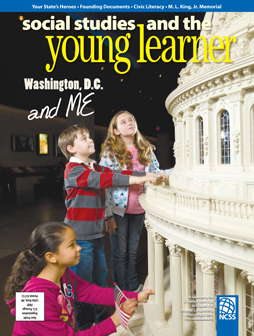
In my most recent issue of Social Studies and the Young Learner (Volume 23, Number 4, March/April 2011) from the National Council for the Social Studies, there’s a brief article entitled “The Uncompromised Curriculum: Videos of Teachers Teaching Social Justice Issues,” by Debbie Sonu. Debbie talks a bit about how difficult it for today’s teachers to include social justice lessons despite narrow, test-focused curriculums. She took videos of three of these determined teachers in action, and they are nothing short of inspiring.
Watch the videos here.
These are classrooms I would’ve loved to be in as a child (heck, I’d love to be in them now!), and you can see how engaged the kids are with the different topics. What I love most about all three of these approaches is the respect each of the teachers has for her students. In the first, the teacher tells her fifth graders that it’s okay to let their discussions wander where they will and not stick to the prepared question list. In the second, the teacher tells her first graders they are not asking first grade questions, they are asking college questions. And in the third, the teacher asserts that all children–gifted or not–have the ability, and in fact the need, to discuss these kinds of issues.
Kudos to these teachers, and to Debbie Sonu for sharing them with us!
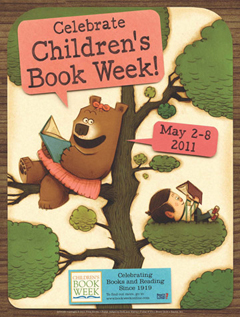
Children’s Book Week has been celebrated through the United States since 1919 with appearances by authors and illustrators, parties, storytelling, and other book-related events in schools, libraries, bookstores, etc., and this year it takes place May 2–8!
Don’t you just love that poster (above) created by the talented Peter Brown? I do! You can order one for yourself right here.
Here are some of my favorite ways you can celebrate (this week–or anytime!):
Test your skills with our Children’s Book Week puzzles!
Help great authors finish a story they have started at Story Starters!
Buy books, check out books, read books… every day!
Locally, Third Place Books in Lake Forest Park has some fun events scheduled, including book talks with Mark Kurlansky and his daughter Talia (WORLD WITHOUT FISH) and Sean Beaudoin (YOU KILLED WESLEY PAYNE) tonight (May 3rd) at 7:00 p.m. and Carmela D’Amico (SUKI THE VERY LOUD BUNNY) on Sunday, May 8th, at 4:00 p.m. They’ll also have a craft table set up all week for kids to make bookmarks and will be offering grab bag coupons.
So, no excuses–it’s time to celebrate!






 Physics: Why Matter Matters by Dan Green and Simon Basher
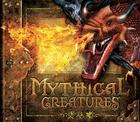 Mythical Creatures by James Harpur and Stuart Martin