I’ve been hugely gratified by the responses I’ve gotten from teachers around the country about using BE A CHANGEMAKER: HOW TO START SOMETHING THAT MATTERS in their classrooms. The very first of these was a lovely 8th-grade ELA teacher from a private Catholic school in Louisiana. She reached out to me before the book was even released, and let me tell you, her enthusiasm was a much-appreciated soothing balm for all of my pre-release jitters!
She is using the book for her students’ “20% projects,” an idea adapted from the corporate world where companies allow employees to spend 20% of their time working on a pet project that interests them. They’ll be using the books throughout the school year to choose self-directed projects and bring them to life. Isn’t that exciting? I sure think so!
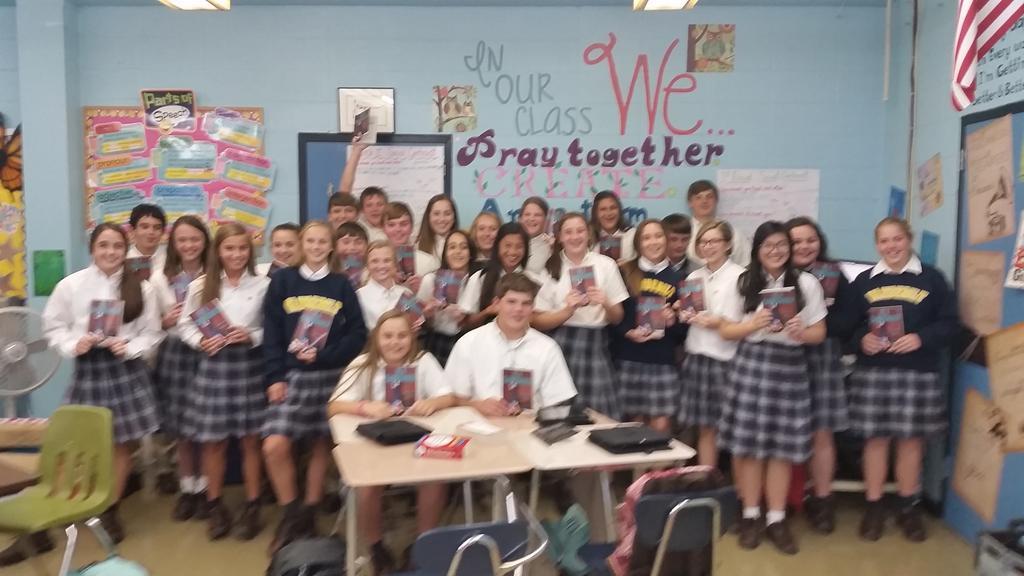
8th graders in class 1 with their new books
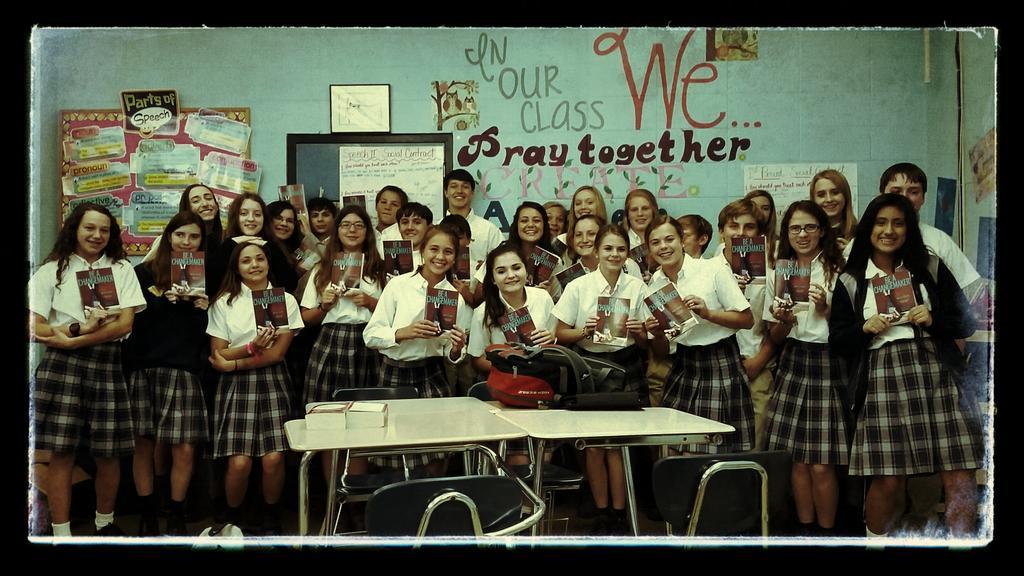
As part of her curriculum, she was able to purchase a copy of the book for each and every one of the students, and she even got them personalized! It was a huge pile of books for me to sign, and such an incredible honor for me to write each student’s name in his or her own book. 8th graders in class 2 with their new books
These pictures are from the day she handed the books out to all of the students. I hope you enjoy seeing them as much as I do!
The students also watched a video I made for them to help kick off their project. I posted about that video earlier this week. Check it out here if you missed it.
I can’t wait to hear about these students’ ideas and follow their progress throughout the school year. I’ll post updates here as I get them so you can follow along, too.
I love hearing about young people using the book, whether on their own or through a class or other organization, so if you’re using (or thinking about using) BE A CHANGEMAKER on your own or with your students, scouts, children, youth group, etc., please let me know! My email address is at the bottom of this page, or you can reach out on my Facebook author page or on Twitter.
To my delight, I’ve had several teachers contact me about speaking to their students at the kickoff of a unit using Be a Changemaker in their classrooms. While I’m always thrilled to do a quick, live Skype call if the timing and permissions work out, so far it’s been easier for everyone if there’s a pre-made video that they can just have preloaded and ready to go.
So, here’s an informal “hello” video that anyone can use to introduce me and my how-to book for teens, Be a Changemaker. Enjoy!
November is here, and that means it’s time for Picture Book Idea Month. So far, I’m two for two: woohoo!
Remember the Howdy Doody theme song? Did you ever notice how PiBoIdMo has the same number of syllables as “Howdy Doody?” Now that I’ve noticed, I can’t get it out of my head. So, I thought I’d share my little earworm with you here:
It’s PiBoIdMo time.
It’s PiBoIdMo time.
Tara and her great crew
Wish PiBoIds to you.
Let’s give a rousing cheer,
Cause PiBoIdMo’s here,
It’s time for books to grow,
So here we go!
I love PiBoIdMo. Sometimes it’s a struggle to come up with ideas (okay, most times), other times they seem to flow faster than I can write them down (okay, rarely, but when it does it’s awesome!). Either way, it feels good to have those ideas tucked safely inside my notebook, ready to blossom when given a chance.
And yes, even nonfiction writers (like me!) can participate in PiBoIdMo! Christy Peterson has a great blog post on how to do that. I recommend reading it here (even if you write fiction!). I usually come up with about half nonfiction ideas and half fiction ideas, and I use all of the methods Christy mentions in her post.
sample Fiction Magic card
This year I’ll also be using a new tool that just arrived (perfect timing!). My friend Deb Lund is a talented author, teacher, and creativity coach. She’s made a deck of cards, called Fiction Magic, which features prompts to inspire writers as well as a handy guidebook on how to use them. I drew one card today, played around with it for a while, and voila… I had two new ideas! You can get your own set of Fiction Magic cards here.
I probably shouldn’t be doing PiBoIdMo at all this year. I have too many projects calling to me at the moment, and the last thing I need right now is more ideas! But, PiBoIdMo is about so much more than the ideas for me. It’s about creativity, playfulness, freedom, and fun, and every year I end up rediscovering why I decided to write for children in the first place. In those ways, it’s good for my career. PiBoIdMo also reminds me to look at the world through a lens of discovery and curiosity, wonder, gratitude, and empathy. In those ways, it’s good for my soul.
I may not love all of the ideas I come up with during PiBoIdMo, but I love what PiBoIdMo does for me. If you want to write picture books, I hope you’ll give it a try, too! You can register through November 7th at this link.
Chris Barton
Chris was kind enough to answer a few of my questions about writing ATTACK! BOSS! CHEAT CODE! Read on for the interview: LT: I have a sort of love-hate relationship with video games. I enjoy playing them, but have to watch my tendency to get obsessive. I suspect my growth is permanently stunted from spending my teen years playing Caverns of Mars on my Atari when I should’ve sleeping. In college, I could spend whole weekends playing Civilization. Now, I struggle not to play too much solitaire, Candy Crush, or Ticket to Ride, and I have to monitor what my kids are playing and how much time they’re spending at it, as well. LT: Tell me about your own video gaming experience, past and present. What kinds of games do you like to play? How has your game-playing changed over time?
CB: Honestly, there’s a lot more to say about my past experience than my present experience — and, even then, there’s not a huge amount. Gaming has never been as big a part of my life as it is in the lives of my kids.
CB: But I do have some vivid memories from when I was growing up: of my great-aunt and ‑uncle giving my brother and me Pong one Christmas, and of us hooking that up to the black-and-white TV in his room; of celebrating the 12th birthday of my friend Ty (to whom Attack! Boss! Cheat Code! is dedicated) by playing a lot of Ms. Pac-Man at Malibu Grand Prix and then going to see Tron in a theater; of finally moving up from Pong by buying Ty’s Intellivision console, on which I especially loved playing Pitfall!; and of the thrill of playing Spy Hunter at the Aladdin’s Castle arcade whenever I got to go the mall 80 miles from my hometown.
CB: I still really enjoy playing arcade games — that overall sensory experience is a surefire way to bring out the 13-year-old in me. Being big fans of the Beatles, Jenny and our kids and I love playing Beatles Rock Band together on our Wii. And I highly, highly recommend the game Gone Home, a first-person game in which you’re a college student returning from a year abroad only to discover that all sorts of things are not right at the house your family moved into during your time away. Recently I was struggling to remember the name of the YA novel I had read that got me all choked up at the very end, but then I realized it hadn’t been a novel at all. It had been Gone Home.
CB: I would undoubtedly spend more time playing games — and watching TV, and going to the movies — if it weren’t for all these books I’d like to write. I can’t do it all. LT: Yes! That’s what keeps me off of them, too… most of the time. LT: What was your favorite part of A!B!CC! to research and/or write?
CB: Oh, it was definitely the page at the end where I use all 26 gaming terms in a single sentence. Figuring out how to do that was not only a fun puzzle to solve, but also a good test of how well I knew my terminology. I suspect that page will also be my favorite part of the book to read aloud, though I’m going to need a bigger set of lungs if I’m ever to get through it in a single breath. LT: That’s funny–I would’ve expected you to say that was the hardest! It was indeed impressive. What, then, was the hardest part of the book to research and/or write?
CB: “I is for Instance,” by far. The usual suspects in an alphabet book — Q, X, Z — weren’t all that challenging. But “I” had surprisingly few terms that seemed like great candidates, especially since I avoided brand names or names of specific games or characters. I was happy to include “Instance,” as I think it’s an important concept for understanding why your screen isn’t overrun by other avatars when you’re playing a massively multiplayer online game, but getting the definition just right — correct, yet easy to understand — took a lot of effort. LT: Interesting! It certainly wouldn’t seem like “I” would be one of the tricky letters. I can see how instance would be a tricky one to explain, though, and you’re right about it being an important concept. Great choice! LT: Were there any surprises along the way?
CB: Sure. I began the project with a desire to show some of the richness and depth and breadth of gaming culture and history. But I was still taken aback by the passion and thoughtfulness and sincerity of other writers, commentators, and gaming professionals who have dedicated themselves to this field far more extensively than I have. And I’ve been especially intrigued by the current parallels between the gaming and children’s literature worlds as both strive to make themselves more diverse and inclusive, to allow more participants and consumers from more backgrounds to take part in these fields and recognize themselves in the work that’s created. LT: I’ve noticed those parallels, too, and it’s definitely a good thing. LT: One last question… I think every book teaches us something new, about the world, about ourselves, or about the craft of writing. What have you learned as a result of writing this book?
CB: I’ve got a new appreciation for what a great tool an alphabet book can be for organizing information about a topic, and for exploring a topic beyond what you’re already familiar with. It’s a format that forces you to dig deeply and employ some creative research skills and weigh why one concept might be more important to include than another. I’d recommend that other writers of all ages give it a try. I myself expect that I’ll return to this approach sooner or later. LT: Great advice! And I look forward to seeing what you do with it next time. LT: Thanks for stopping by and sharing your thoughts, Chris. I had a great time, and I wish you the best of luck with ATTACK! BOSS! CHEAT CODE!
An ironic yet informative alphabet that defines the most important gaming terms that everyone needs to know, Attack! Boss! Cheat Code! A Gamer’s Alphabet is the ultimate crossover gift for our age, a book that can actually bring together video game-obsessed kids and their often perplexed parents.
If you can decipher the following sentence, you don’t need this book: “This open beta game is in third-person but first-person is unlockable if you know the cheat code or install your own mod, but either way, for the best attack on the boss on this level, try to grab that power-up!”
— See more at: http://powkidsbooks.com/attack-boss-cheat-code-a-gamers-alphabet/#sthash.sLnYcu9z.dpuf
Okay, I know I’m showing my geeky gamer girl side, but I love, love, love this book, and I think today’s young (and not-so-young) readers will, too!
It’s an alphabet book, of course, which means the information is organized by letter. Within that constraint, Barton somehow manages to work in a whole bunch of key concepts necessary to understanding video games. Some are expected, such as “boss.” Others are more surprising, like “instance.” In either case, readers will love seeing the terms they’re more familiar with from the games they love playing, as well as the terms they’re less familiar with but may have run across in conversations with friends. I’ve played a fair amount of video games in my lifetime, and I was still very pleasantly surprised to learn a few new terms myself!
The artwork is bright and fun and helps illustrate the concepts well. The illustrator tips a nostalgic hat to older games that more grownup readers will appreciate, while at the same time referencing enough current faves to delight younger gamers.
Check this one out, and then come back on Wednesday for my interview with the author, Chris Barton!
(Disclaimer: The review copy was won by the blogger as part of a promotional giveaway.)
A few weeks ago I had the pleasure of being the special guest at an incredible event, Stratos Product Development’s annual company open house. The company is mentioned on page 138 of my book Be a Changemaker, because they were one of the original funders of Edward Jiang’s StudentRND venture, which I profiled in chapter 12.
As you can see, this year’s theme was Oktoberfest, and they went all out with decorations, food, beverages, and even a polka band!
It’s too bad I didn’t get a chance to dance, but I was having too much fun talking with Stratos employees and guests.
I was warmly welcomed, and folks seemed pretty excited about Be a Changemaker, too.
At one point, a storm picked up and we had to (quickly!) move everything inside, but that just made it easier to mingle.
And as attendees left for the evening, there were piles and piles of books for them to take home, all of which I signed and, if desired, personalized (yes, my hand was tired!).
What a wonderful evening! I left feeling thoroughly impressed with everyone I had talked to–and with the company itself for bringing them all together.
I’m ever so grateful to Stratos Product Development for including me. They’re the perfect example of a for-profit business that is committed to doing good in the world, and it was such an honor to participate. Click here to check out all of the great photos from the event, and here to see what this totally awesome company is all about.
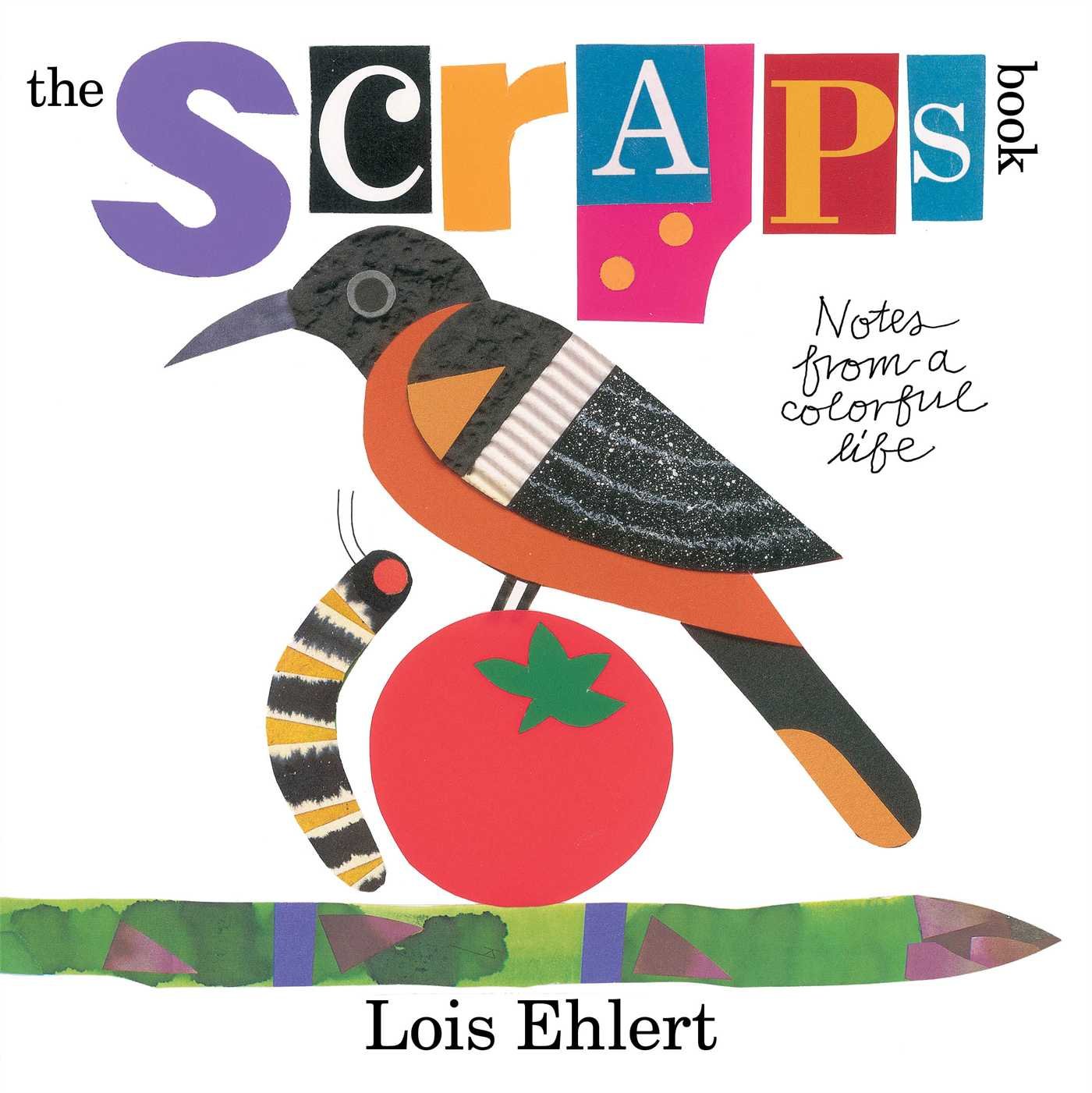
THE SCRAPS BOOK: NOTES FROM A COLORFUL LIFE
written and illustrated by Lois Ehlert
published by Beach Lane Books/Simon & Schuster, March 2014
72 pages
There have been several picture-book autobiographies of children’s book authors and illustrators over the past few years. Sadly, most have left me feeling just a little underwhelmed. While I personally enjoyed them, I felt like they were aimed more at their long-time adult fans than at contemporary child readers. While I, as an adult, was able to appreciate the rich context and interesting personal histories, I wondered if children would be able to relate to the stories and find directly relevant meaning within the pages. So, although I myself am a fan of Lois Ehlert, I’ll admit I was a bit skeptical when I picked up THE SCRAPS BOOK. Boy was I in for a delightful surprise!
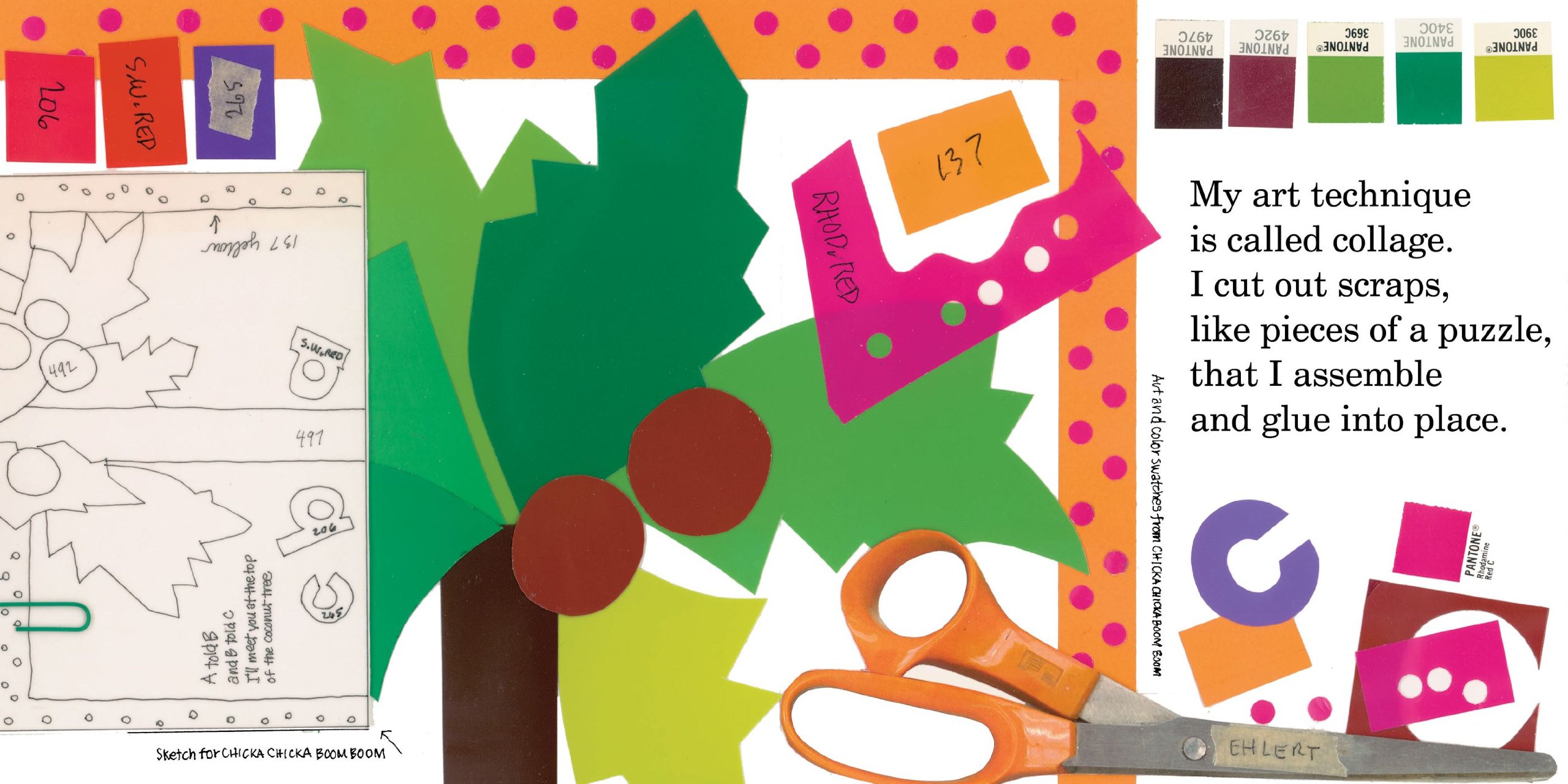
Despite the high page count, there is nothing in this book that feels the least bit self-indulgent. Every page seems lovingly designed to encourage and instruct young artists. (And aren’t we all artists when we’re young? Perhaps with this book, more of us will remain so.) Throughout, Ehlert generously shares her inspirations, her processes, her notes and journals, even her messes and mistakes, giving readers insights into her books as well as her life as an artist.
I think this is truly a book people of all ages can enjoy, and the world is definitely a better place for having THE SCRAPS BOOK in it.
(Disclaimer: Review copy was checked out from my local library.)
Pin by StartSomeGood on Together, we can change the world | Pinterest
Quoted in BE A CHANGEMAKER, chapter 1, taken from a speech the President gave to his supporters in Chicago on February 5, 2008.
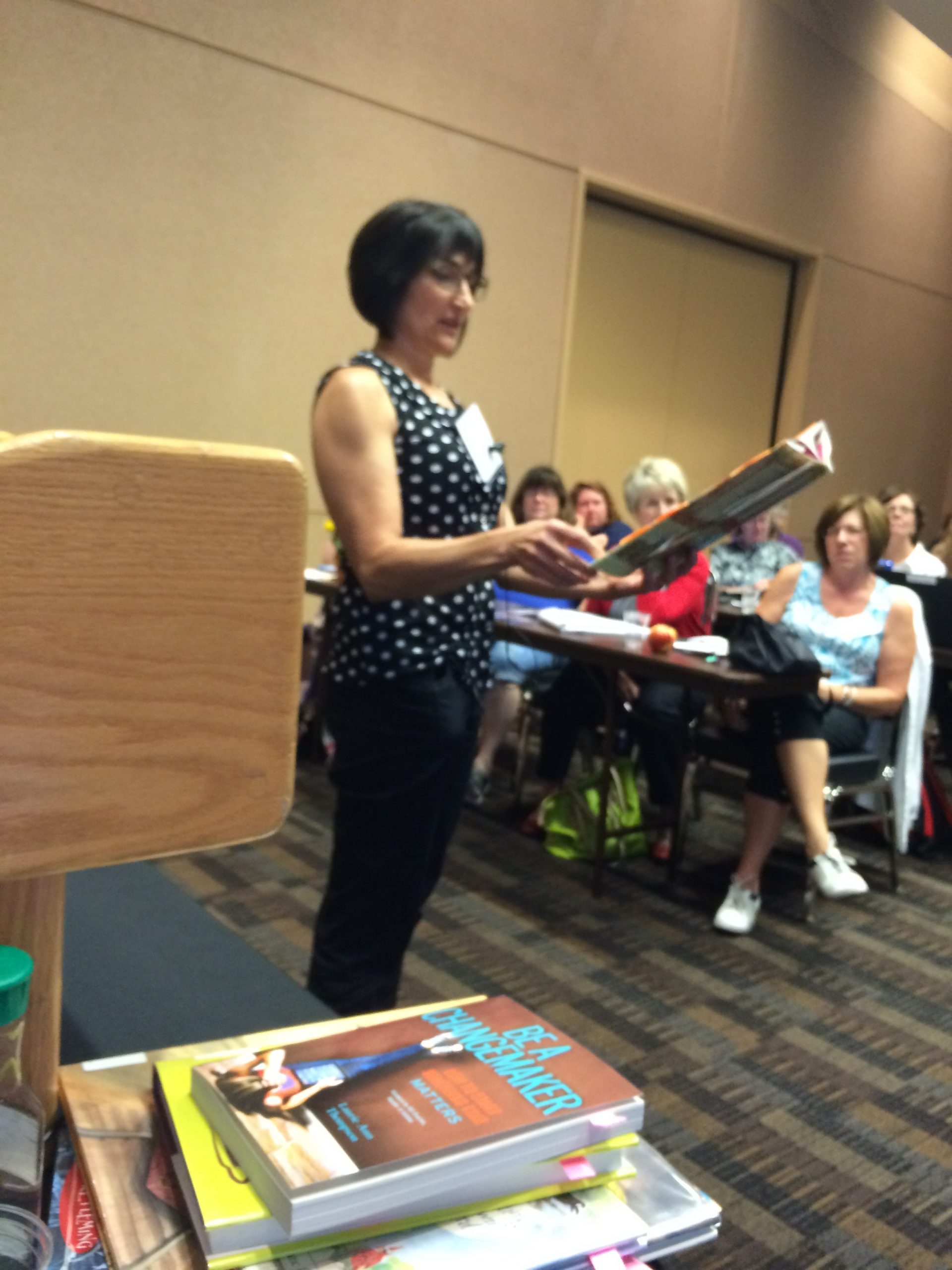
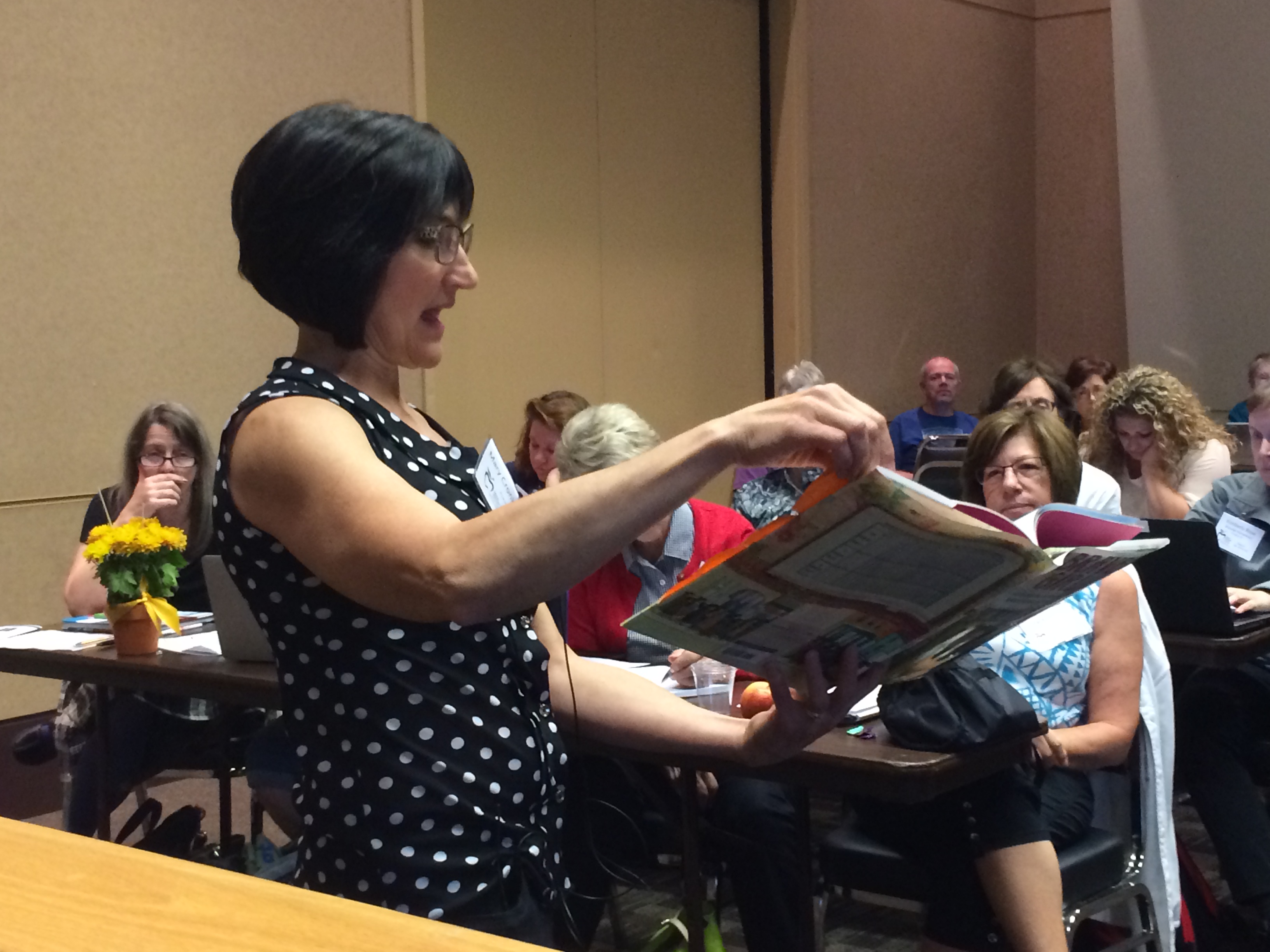
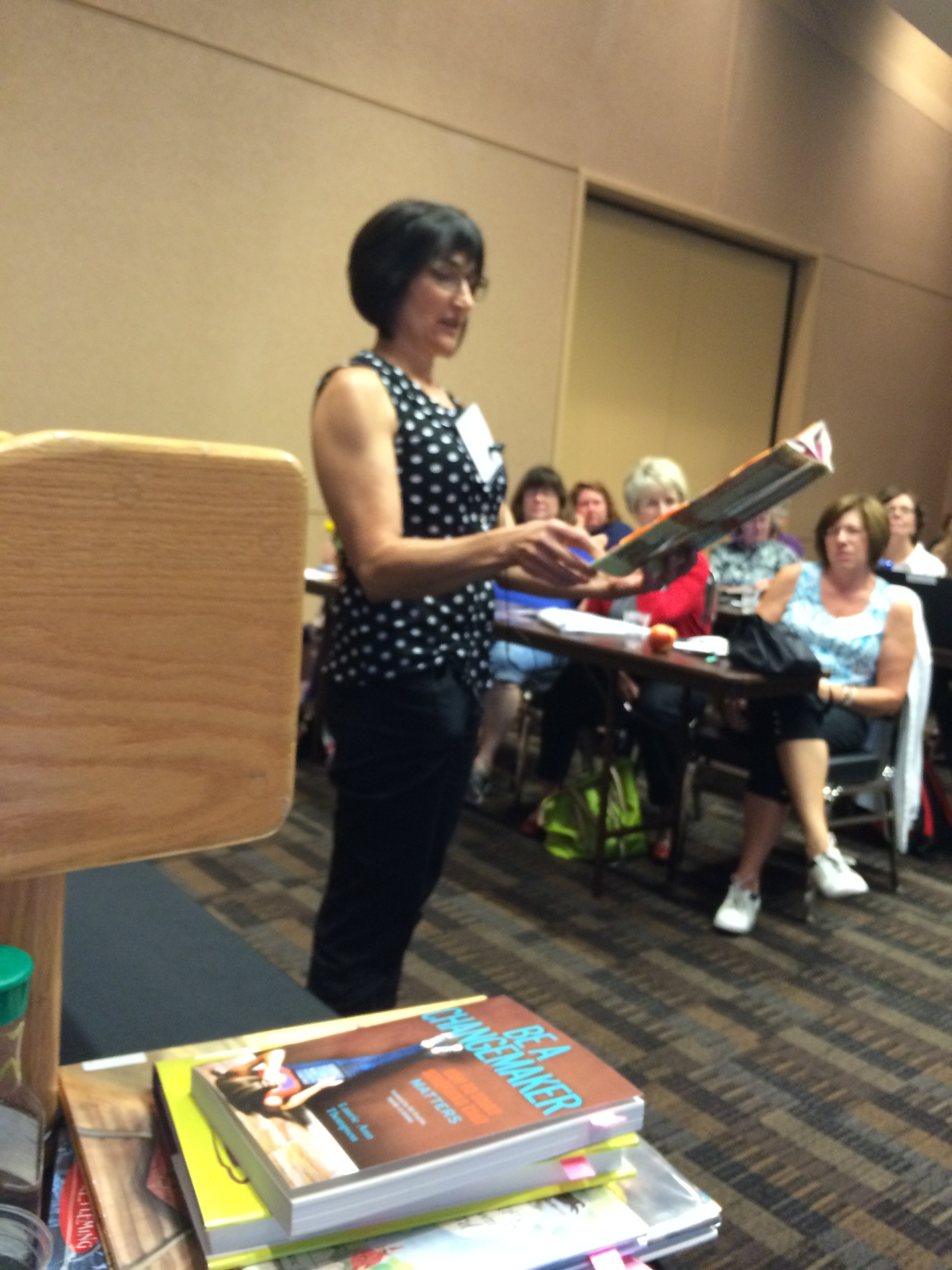
I had a wonderful time presenting with Mary Cronk Farrell at the 2014 WLMA Conference last Saturday! The title of our talk was “Fostering 21st Century Learning with Today’s Nonfiction,” and we delivered it to a room overflowing with teacher/librarians (aren’t t/l’s the best!?) who were looking for new ideas and book recommendations.
Mary sharing BRAVE GIRL
Our presentation discussed how much of the nonfiction being published now is so much more than “just” its subject. There are innovative formats, emotionally-charged stories, cross-discipline explorations, etc. A just-the-facts approach simply won’t be published these days, as kids have easy access to information in a variety of formats AND are faced with so many options competing for their attention. This makes nonfiction a particularly compelling choice for students in and out of the classroom or library setting. Mary and I took turns sharing some of our favorite recent nonfiction titles–including Mary’s PURE GRIT and my BE A CHANGEMAKER and EMMANUEL’S DREAM– and how we felt they could be used in the library or classroom to achieve multiple learning goals simultaneously, including covering core curriculum subjects, social-emotional learning, problem solving and critical thinking, creativity and innovation, information and media literacy, and technology skills. We got the librarians talking to us and to each other, and we even had them try out some exercises they might use with their students. (Let me tell you, those librarians can write, too!)
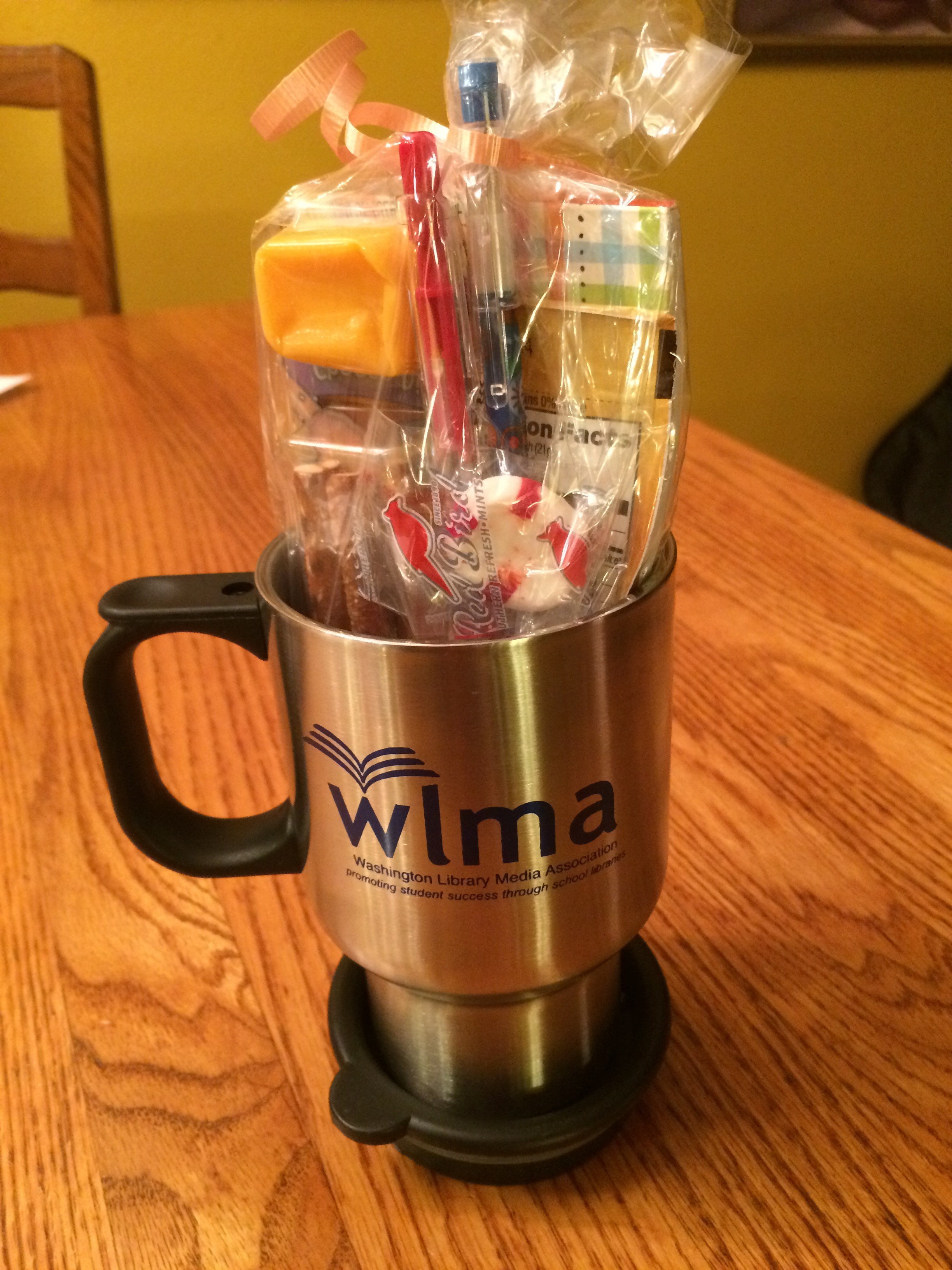
Since several attendees asked for our slides, here is the deck we used in our talk, and, since we ran out of handouts due to the overwhelming attendance, here is the handout that we passed out with the list of books referenced. Speaker goodie cup!Thanks so much for having us, WLMA! Thanks so much for the book love and dedication you put into your work each and every day, teacher/librarians! And, thanks, Mary, for being such a great co-presenter and making everything easy!
My dog, Prim, catching up on some lap timeOf course, no matter how much fun I have speaking at conferences like this, it’s always good to be home again.







 Mary and I took turns sharing some of our favorite recent nonfiction titles–including Mary’s PURE GRIT and my BE A CHANGEMAKER and EMMANUEL’S DREAM– and how we felt they could be used in the library or classroom to achieve multiple learning goals simultaneously, including covering core curriculum subjects, social-emotional learning, problem solving and critical thinking, creativity and innovation, information and media literacy, and technology skills. We got the librarians talking to us and to each other, and we even had them try out some exercises they might use with their students. (Let me tell you, those librarians can write, too!)