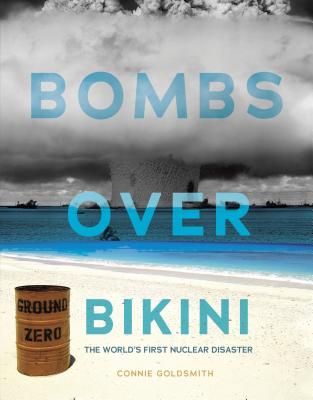
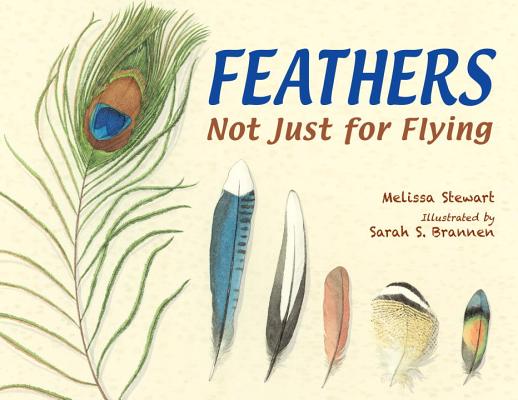
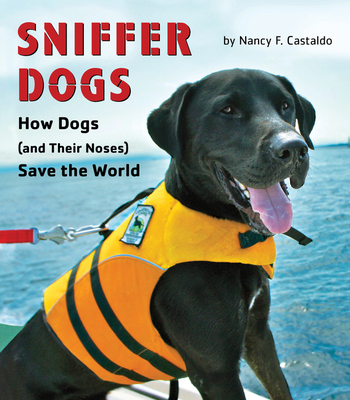
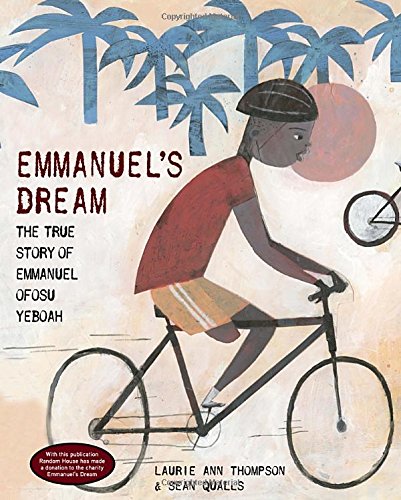
It’s a huge honor to announce that Be a Changemaker has won the Society of Children’s Book Writers & Illustrators’ (SCBWI) Crystal Kite Award for the West division, which includes Washington/Oregon/Alaska/Idaho/Montana/North Dakota/South Dakota! This award is voted on by other SCBWI members, who are also authors and illustrators, so it’s especially rewarding to be recognized. Winning is a bit bittersweet, though. First, there were so many great books in the overall list of eligible titles (including the one I voted for, which didn’t make the finals). Second, the other three finalists are all fantastic books, written by a trio of lovely authors whom I’m glad to call my friends. I honestly would’ve been just as happy to see any of these fine books win as I am to see my own. If you haven’t seen these yet, please check them out!
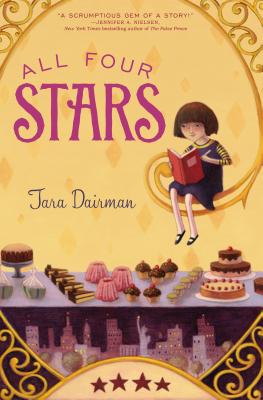
This year’s Crystal Kite Award announcement was exciting for another reason, too. My friend and agent-sister Tara Dairman won the Southwest division with her book, All Four Stars! I love All Four Stars, and I’m thrilled to see it get this recognition. Congratulations, Tara!
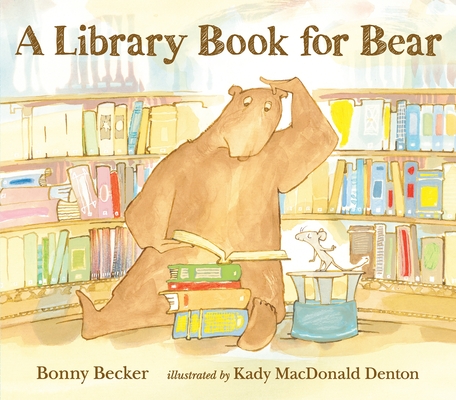
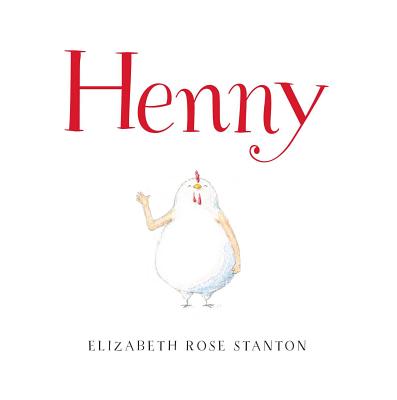
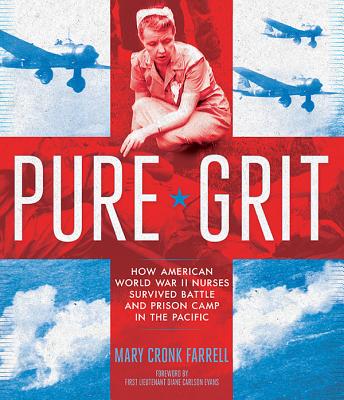
It was also pretty great to see so many awesome nonfiction books making the list this year. Here are some of my favorites:
California/Hawaii
New England
New York
Thank you to all who voted! For a complete list of all the 2015 winners, click here.
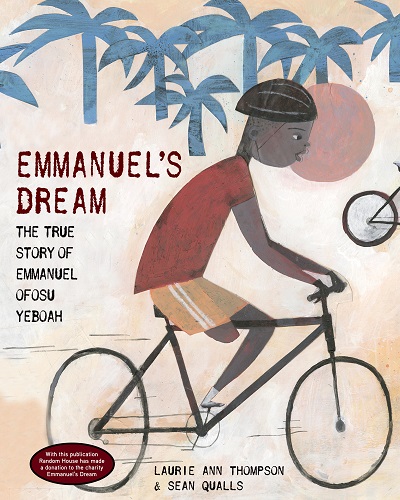
This is something I’ve been meaning to do for a very long time now, but just never got around to doing. Better late than never, right? Here’s a roundup of all the fabulous blogs that featured Emmanuel’s Dream a few months (gulp) ago for the blog tour. If you want to read reviews of the book, guest posts from me, or interviews with me about the book, look no further! Here they are gathered all in one place to make things easy for you.
Many thanks to these fantastic bloggers for their dedication to promoting great books for kids! I hope you’ll check them out for their other reviews and posts, too.
Happy National Volunteer Week!
According to the Points of Light website, “National Volunteer Week, April 12–18, 2015, is about… taking action and encouraging individuals and their respective communities to be at the center of social change – discovering and actively demonstrating their collective power to make a difference.”
That sounds a whole lot like the message behind Be a Changemaker, don’t you think? I thought so, so I decided to help spread the word about an initiative associated with National Volunteer Week called “What’s Your Story?” The purpose of that effort is to celebrate people who are doing awesome things and encourage others to get involved. You can play along by sharing your story, tagging friends and asking, “What’s Your Story?” and use #NVW2015 in hopes of getting #NVW2015 to trend on Twitter.
As for me personally, my most recent volunteer work was yesterday, helping to stuff 370+ attendee folders, organizing handouts, and getting prepared for the SCBWI Western Washington’s annual conference for writers and illustrators. It was hard work, and the group of a dozen or so of us were focused and busy for four hours, yet there were hugs, and laughter, and doughnuts, and it felt absolutely wonderful to be a part of. The conference itself kicks off on Friday, and I’ll be busy participating in and volunteering at it for three days straight. It’s an amazing experience every year. I can’t wait!
For more information on National Volunteer Week, the “What’s Your Story” campaign, or how you can play along on Twitter, Instagram, and/or Facebook, visit the Points of Light web page here.
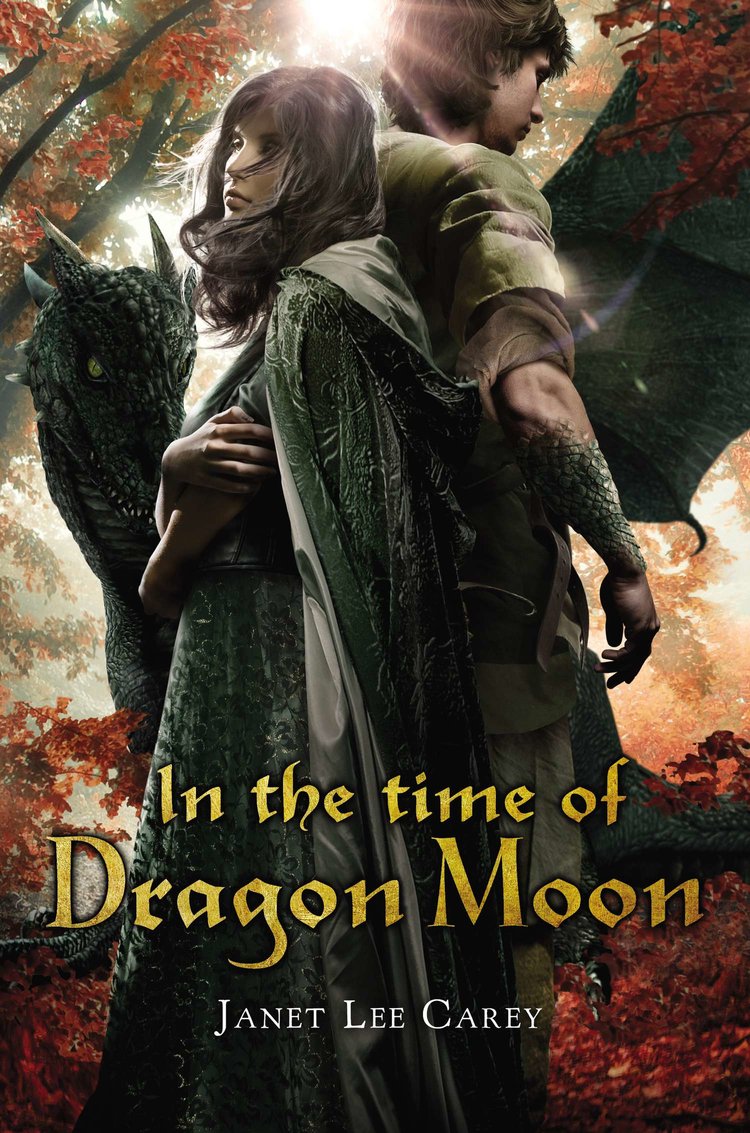
Despite some recent posts about fiction picture book New Shoes and its author, Susan Lynn Meyers, I typically try to stick to posts about nonfiction books and authors on this blog. I’m breaking that self-imposed rule yet again, however, because I’m thrilled to host my friend and agent-sister, the amazing author Janet Lee Carey, on her blog tour for her upcoming fantasy novel, In the Time of Dragon Moon!
About the Book: Beware the dark moon time when love and murder intertwine All Uma wants is to become a healer like her father and be accepted by her tribe. But when the mad queen abducts her and takes her north, Uma’s told she must use her healing skills to cure the infertile queen by Dragon Moon, or be burned at the stake. Uma soon learns the queen isn’t the only danger she’s up against. A hidden killer out for royal blood slays the royal heir. The murder is made to look like an accident, but Uma, and the king’s nephew Jackrun, sense the darker truth. Together, they must use their combined powers to outwit a secret plot to overthrow the Pendragon throne. But are they strong enough to overcome a murderer aided by prophecy and cloaked in magic?
From the first time I heard about this book, I’ve been intrigued, and Janet has kindly agreed to answer a few of my questions. Welcome, Janet!
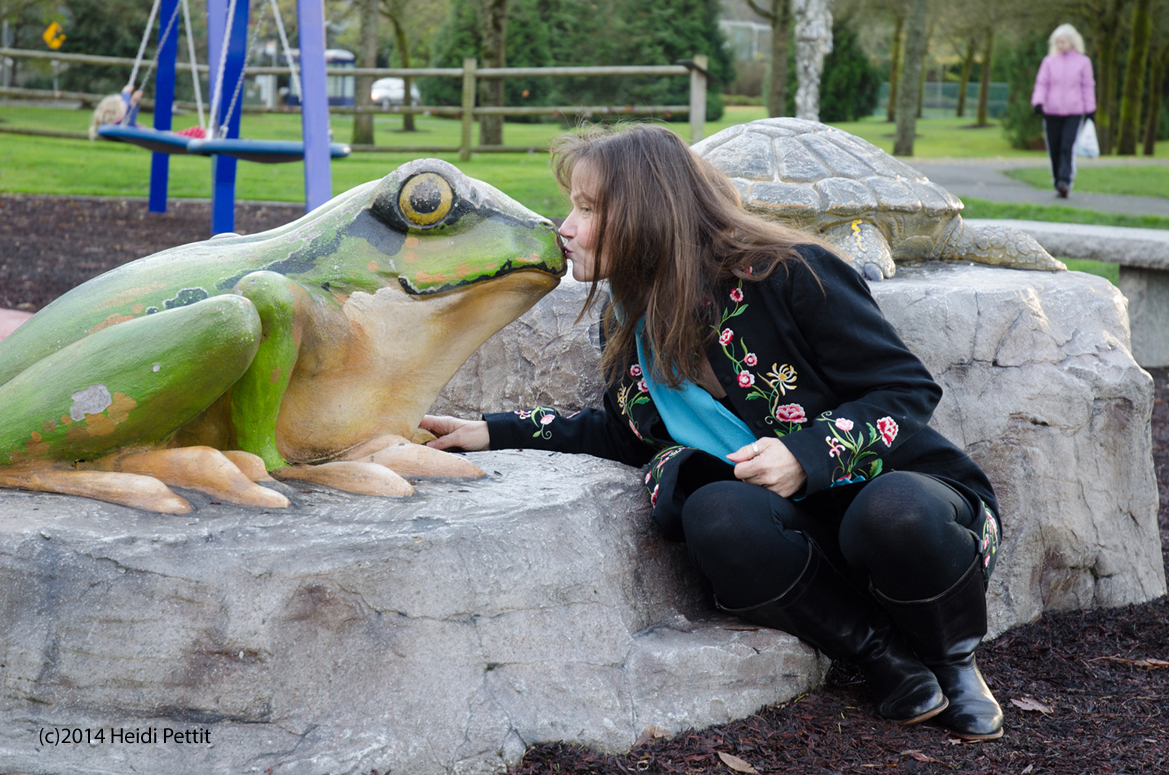
photo credit Heidi Pettit
LT: Where did you first get the idea for this particular book, and how did it end up growing and changing as you brought it to life?
JLC: The passion to tell the story of an indigenous healer formed when I flew to Hawaii for a “Maui Immersion” with indigenous healers Lei’ohu and Maydeen. I was profoundly changed by these women’s healing practices as I learned of ancient traditions and the power of the earth’s healing. I knew I wanted to create a story around a female healer, thus Uma was born.
JLC: Jackrun’s story took shape at the same time. I knew they would meet and become embroiled in dangerous castle intrigue involving prophecy, magic, and murder. The novel went through many transformations. I wrote the first draft in both Jackrun’s and Uma’s viewpoint. Later, taking advice from my editor Kathy Dawson, I changed it to a single viewpoint to reveal more of Uma’s personal journey and increase plot tension.
LT: Oh, I love hearing the origins of the female healer story! And it’s so interesting to hear about the viewpoint change.
LT: On a related note, here’s a question from my oldest child (whom you know happens to be one of your biggest fans!): “Why dragons?”
(Artwork by Jessica L’Esperance)
JLC: Oh, I love this question. I didn’t start out wishing to write about dragons, only to write fantasy novels like the ones I’d grown to love only with my own spin. The first dragon, Lord Faul, emerged from a winter of reading too many fairytales with perfect princesses and evil dragons. I wanted to mix things up a bit, so I created a princess with a dragon’s claw, in Wilde Island book one, Dragon’s Keep, and a powerful fractious dragon with his own particular history or rather, ‘hisssstory’. From there the dragon characters continued to enter the books with their own majestic, intelligent, wild, imperious, stubborn, delightful, personalities. Vazan flew into In the Time of Dragon Moon with her own pithy opinions on the English Queen who holds Uma’s tribe captive on the southernmost tip of Wilde Island;
“This queen will leave the king’s soldiers in Devil’s Boot. We’ll lose all our freedom to these English vermin!”
LT: Ha! I love that the dragons are entering of their own accord. But speaking of English queens… It seems like a bunch of research went into this book. Can you tell us about that? Was it different from previous books? Were there any surprises or stumbling blocks? Do you think you’ll reuse any of that research in future stories?
JLC: All the research I’d done on medieval life for the first two books helped this book enormously. That said, In The Time of Dragon Moon offered a brand new set of challenges. This time tribal medicine had to play a vital role. I created the Adan’s medicinal approach from many sources starting with books about medieval medicine, and expanding to books and articles on tribal medicine, preferably written by indigenous healers themselves. I was also privileged to listen to firsthand accounts of traditional healing practices. All these influences quickened my imagination and helped me create the Adan’s close relationship with plants, and his healing philosophy. The research also compelled me to help save the rainforests, where plants vital to healing are even now being destroyed. Help out here.
JLC: Finally, you asked if there were many surprises and stumbling blocks. Yes! The good news is every stumbling block is a creative opportunity. Much as I hate stumbling blocks, I’ve grown to love the surprising results.
LT: Janet, you’re one of the most creative people I’ve ever met, and that’s saying something given how many authors and artists I know! Can you give us a tiny peek into how your creative process works?
JLC: Wow. Thanks for that, Laurie. We’ve talked a lot about creative process in my novel writing courses and the rule is always ‘Do what works for you,’ so knowing my process may not be the same as yours or anyone else’s, I’ll share a bit about what’s worked for me over the years. I start each day as tabula rasa as possible, beginning with yoga, meditation, and prayer then moving into short spiritual readings from a few books, and journaling — morning pages right out of Julia Cameron’s The Artist Way. All of this readies me for creative flow.
JLC: When the kids were school age I broke the morning up, doing the yoga and meditation before getting them off to school, and the rest of the things after. Mediation clears my mind and readies me for journaling which is “active listening” on paper. The journal pages usually drift toward what’s happening in the book so I move to the office and begin writing. The process sounds time consuming but it works for me. Also, aside from my lovely critique group the Diviners, I belong to an artist’s group with fellow authors, painters, musicians and sculptors called Artemis.
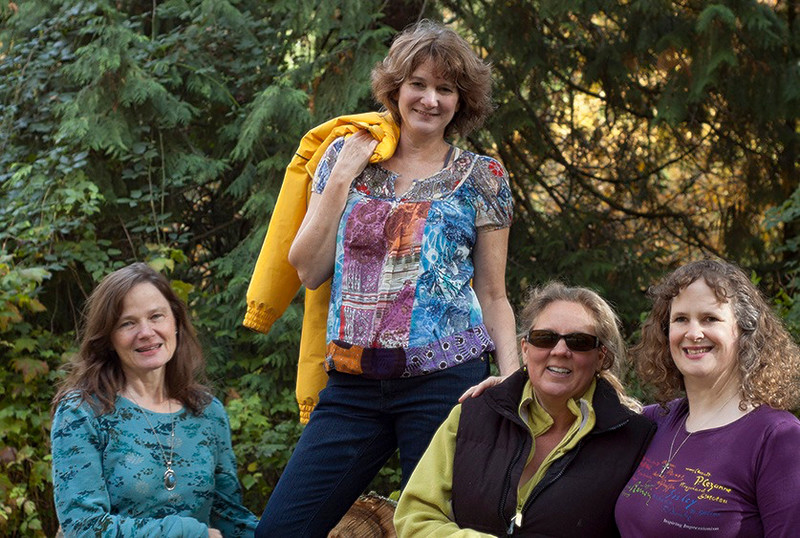
Left to right, author Janet Lee Carey, visual artist Heidi Pettit, artist/sculptor Jill Sahlstrom, author Katherine Grace Bond, not pictured; sculptor Lisa Sheets, author Dawn Knight, author/musician Margaret Kellermann.
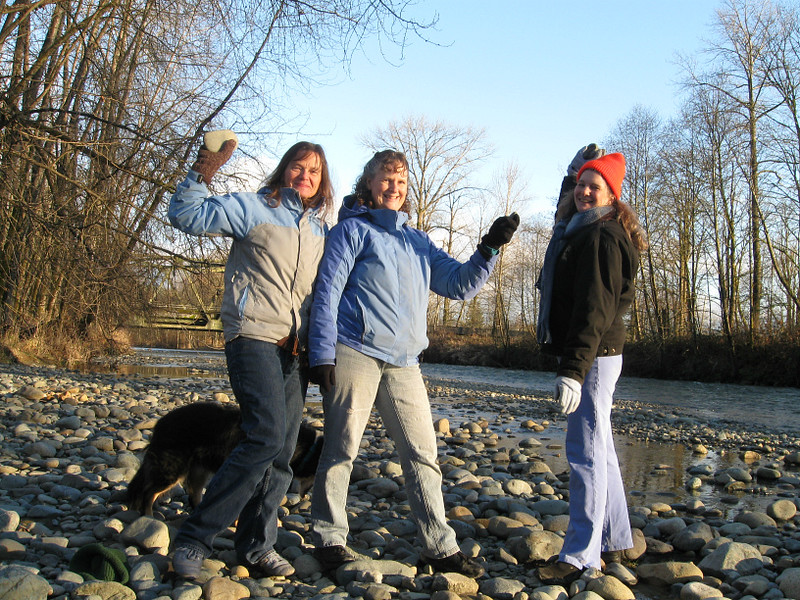
JLC: When Artemis gets together, we take turns sharing about our creative process. I learn as much from the visual artists and sculptors as I do from fellow authors. These sessions sizzle with creativity. Photo below of our yearly River Rock Ceremony. We throw stones in the river with our wishes, plans and dreams. Hours of kerplunking fun! LT: Ah, wishes, plans, and dreams… the perfect segue to my next question: Whenever I’m not writing, I feel like I should be; but whenever I am writing, I feeling like I’m neglecting other important things in my life. What tricks have you learned for balancing your writing with the demands of keeping up with the industry, promoting existing work, taking care of your home and family, personal recreation and self-care, etc.?
JLC: I once made the mistake of confiding this very thing to a soccer mom and she looked at me like I was off my rocker! Here’s the thing. I think writers feel compelled deep down to write. When we neglect it for a while, we get the niggling feeling that something is wrong. When we neglect it for too long, we feel depressed or angry. Once we give in to the urge and actually sit down and write, we feel a great deal better. But then as we write, the laundry piles up and the dust bunnies gather fomenting war under the beds, and our children want a really decent dinner and we feel guilty for having taken so much time away to write, so we go back to our daily duties (the ones other people understand). Then we begin to neglect our writing and start getting that niggling feeling that something’s wrong all over again. There is No solution Laurie T. and I’m not even going to go into taking necessary time to stay in shape or keep up with the industry and launch your books once they’ve been written. The only thing you can do is to be kind to yourself and your family and to accept that things will rarely feel in balance. Bottom line your children will survive and you will get some writing done before you die.
LT: “Bottom line your children will survive and you will get some writing done before you die.” Words to live by. Thank you, Janet! LT: One more question for you: I think every book teaches us something new, about the world, about ourselves, or about the craft of writing. What have you learned as a result of writing this book?
JLC: So well said, Laurie! Craft wise I challenged myself to leap and loop. To leap into new scenes and briefly loop back and catch the reader up to anything important that happened between scenes that affected the character emotionally. I’m still trying to perfect this fabulous technique. As to what I learned from the book, I think Uma’s personal strength as she’s trying to heal Queen Adela’s madness taught me something vital about love, acceptance and the kind of deep healing that women often do which is overlooked or taken for granted. As Uma’s medicines fail, she simply bathes the queen, combs her hair, and sings to her. Uma simply stays by the woman’s side, for as Uma says, “Joy and sorrow are songs women have long known.”
LT: Breathtakingly beautiful, Janet. Thank you so much for answering all of my questions!
Are you hooked yet? Here’s some more information about Janet and the book…
Book trailer:
Reviews:
“In the Time of Dragon Moon is a story of courage and romance that readers will not soon forget.” ~VOYA
“The author’s world-building is detailed and fascinating … This is a must-purchase for libraries owning the earlier installments and a great choice for where teen fantasy is popular.—School Library Journal
About the Author:
Janet Lee Carey grew up in the bay area under towering redwoods that whispered secrets in the wind. When she was a child she dreamed of becoming a mermaid (this never happened).She also dreamed of becoming a published writer (this did happen after many years of rejection). She is now an award-winning author of nine novels for children and teens. Her Wilde Island Chronicles are ALA Best Books for Young Adults. She won the 2005 Mark Twain Award and was finalist for the Washington State Book Award. Janet links each new book with a charitable organization empowering youth to read and reach out. She tours the U.S. and abroad presenting at schools, book festivals and conferences for writers, teachers, and librarians. Janet and her family live near Seattle by a lake where rising morning mist forms into the shape of dragons. She writes daily with her imperious cat, Uke, seated on her lap. Uke is jealous of the keyboard. If Janet truly understood her place in the world, she would reserve her fingers for the sole purpose of scratching behind Uke’s ear, but humans are very hard to train. Visit her website here.
A couple of weeks ago I announced giveaways here and on Goodreads for both Be a Changemaker and Emmanuel’s Dream. We have winners!
From my list of newsletter subscribers, chosen by Random.org, the winners are… Jim McGinley wins a signed copy of Be a Changemaker! I swear it was completely random, but this is just so perfect. Jim was one of the very first people to help and encourage me on my quest to write this book, and his early support meant a lot to me. He’s even mentioned in the acknowledgements. Sometimes fate is hard to deny, you know? The winner of a signed copy of Emmanuel’s Dream is Lindsay Fouts! This seems like a great fit, too, since Lindsay is both a picture book writer and the mother of a young son. I hope they enjoy the book.
And on Goodreads, the winners were far flung: Adage from Romania won Be a Changemaker, and Jessy from India won Emmanuel’s Dream. Yes, it’ll cost me a little extra in postage, but it’s exciting to know that my books will be traveling around the world!
Finally, in case anyone is curious, some giveaway stats from Goodreads…
1004 people requested Emmanuel’s Dream and 464 added it to their To-Read shelf, and
1441 people requested Be a Changemaker and 610 added it to their To-Read shelf.
I recently posted a review of a fiction picture book called NEW SHOES. I love the book so much, and today I’m thrilled to welcome the author, Susan Lynn Meyer, to the blog! Susan was kind enough to answer a few of my questions. I hope you’ll enjoy getting to know her a little better. I know I did!
Susan Lynn Meyer LT: Welcome, Susan! I’m so excited to learn more of the story behind the story of NEW SHOES.
SLM: Hi Laurie! Thanks so much for your interest in NEW SHOES. LT: How did you first become interested in writing about the Jim Crow time period, and what in particular led to thinking about framing it in the context of trying on shoes?
SLM: I was reading about segregation from the 1940s onward both just because I was interested and as research for a novel I just finished writing. (It is called SKATING WITH THE STATUE OF LIBERTY and it’s about Gustave, a twelve-year-old French Jewish refugee who comes to New York in 1942 because his family is fleeing the Nazis.) I was startled to come across a piece of information I hadn’t known about—that in many stores, African-Americans were not permitted to try on clothes, hats, or shoes. I thought a lot about what that must have felt like, especially for a child encountering it for the first time. As I mulled that over, it began to shape itself into a story. LT: I love that, how one book project sparks and informs another, and in a different genre and on fairly different subject, too. How much research did you do for this book? Can you tell us about that process? During your research, did anything surprise you, catch you off guard, or make you change your planned course for the book?
SLM: I’m lucky because I have access to a terrific academic library since I’m also an English professor at Wellesley College. I went to the stacks, checked out a lot of books about Jim Crow, and started reading! Among the most intriguing things I came across were accounts of the ways, large and small, that African-Americans coped with Jim Crow, the psychological and practical strategies they used. Parents would make sure to bring along water so that their kids didn’t have to face segregated drinking fountains. People would refuse to patronize restaurants where proprietors refused to seat them and would only sell them food by handing it out the back door. I loved the story of one black teenager who had a job at a grocery store and who was infuriated by the stupidity of the fact that brown eggs and white eggs had different prices—and that white eggs were cheaper because they were “better.” So he’d secretly switch the eggs around, mixing them up in the cartons! (I put that incident in the novel I just finished, but I ended up taking it out. I love it so much that I may use it again someday!)
SLM: The hardest thing about writing NEW SHOES (it went through 23 drafts over several years) was figuring out what Ella Mae and Charlotte could do to resist the unfair situation they found themselves in. The solution they come up with isn’t perfect, in the sense that the shoes are still second-hand, but people can buy them with dignity. Sales at Mr. Johnson’s shoe store, where Ella Mae hasn’t been allowed to try on shoes, are likely to suffer as a result, which is a nice additional benefit. LT: In EMMANUEL’S DREAM, I wrote about a disabled man from Ghana, despite being none of those things myself. I know people have questioned if I should’ve been the one to write that story, despite the fact that I did extensive research and had the manuscript vetted many times along the way, including by Emmanuel himself. IT was a story I felt I had to tell, in part because no one else had, but also because I could so identify with the emotions involved, even if not the specific experiences. Clearly you also believe that it is okay to write outside of our own culture, as long as we do so with care and respect. What do you say to people who question your authority to write this book?
SLM: All I can really say is that I write the stories that come to me. When I found out about this aspect of Jim Crow, it really hit home for me, and I mused a lot about what that would have felt like, especially for a child encountering it for the first time. Imagining and wondering led me to this story. I’m not demographically similar to any of the protagonists in the books I’ve had published so far, actually—I’m not a black American girl living in the 1950s and I’m not a French Jewish boy living in the 1940s either (as in my novel BLACK RADISHES or the sequel to it that I just completed, SKATING WITH THE STATUE OF LIBERTY). Writing fiction is about imagining your way into a character who is not you—and trying to do it so effectively that your reader is drawn in as well. Writing for children especially involves this kind of leap—because all the writers are adults trying to imagine their ways into the minds of children. Writing across gender or time or nationality also requires this kind of leap.
SLM: But in order to be persuasive to the reader, that imaginative leap has to be an informed one, and it was also important for me to get the reaction of black friends to NEW SHOES when it was in draft. One early reader told me something that really resonated with me. I had initially had Ella Mae’s mother directly express anger after the shoe store incident. But this friend said that her older relatives would not have talked that way about racism to their children, that to protect the child, they would have encouraged the child to think positively. When I thought about my own older relatives and also about the way I am as a parent, that felt so intuitively right to me. So I changed Ella Mae’s mother’s answer. Now she tells Ella Mae that she should think about how nice her feet will look for school. And that feels so much more like what a parent in those circumstances would do. I’m really grateful for that reader’s early response. LT: Oh, I love that answer! So, how exactly were you able to “imagine your way into a character who is not you” in this case? How did you put yourself in someone else’s shoes (no pun intended), and tell a story that—on the surface, at least—you have no direct experience with? What was the personal connection for you?
SLM: In some ways, my own experiences inevitably find their way into anything that I write. I was one of six children, money was limited, and we wore a lot of hand-me-downs. I now enjoy telling students at the schools I visit about an absolutely humiliating experience I once had with hand-me-down boy’s long underwear. (Don’t ask!) My parents also had me and my brothers and sisters polish our school shoes every weekend and we washed the shoelaces when we did it. I’ve never asked to find out if anybody else did that! I wasn’t great as a kid about doing chores—who is?—but I actually didn’t mind polishing my shoes and I found washing the dirt out of the shoelaces, the way Ella Mae does, very satisfying. On a deeper level, there’s the issue of injustice of all kinds, which I was very attuned to as a child. I often said furiously, “It isn’t fair!”—and I hope kids will have an intense reaction of this kind to the situation in NEW SHOES. LT: Well, I’ve never polished shoes or washed shoelaces, but I’m sure almost every kid—including me—has roared, “It isn’t fair!” It’s kind of sad that we become more desensitized to injustice as we get older. LT: I think every book teaches us something new, about the world, about ourselves, or about the craft of writing. What have you learned as a result of writing this book? What surprised you the most during the process?
SLM: I loved hearing from Eric Velasquez about his method of illustration, and it really made me realize how much a picture book is a truly collaborative process. Eric has models pose, takes photographs, and then paints from those photographs. He chose two girls who were friends to pose for Ella Mae and Charlotte, because he wanted their closeness to show in their body language. It is wonderful to me to look at his paintings and to think about all the people besides me—Eric Velasquez, the models, as well as all the people working at Holiday House—who came together to create this book. I also especially love the end papers Eric designed for the book, which are tracings of one of his girl model’s feet. They encapsulate what the story is about so wonderfully in a simple and powerful visual image. LT: Yes, I loved the end papers, too! And the illustrations are so beautifully realistic. Kudos to Eric! LT: I always said that I would know I’d made it when I received one letter from one child saying that something I wrote made a positive difference in his or her life. How do you define success? Do you feel like you’ve achieved it? If not, what’s left on your to-do list?
SLM: I think I’m always going to want to write another book and get it published, so I don’t know if I’ll ever really feel as if I’m at the point of success! But the other day, I checked out a book from the public library, and it been read so many times that the pages were soft they were about to tear. What I want more than huge sales is to have my books find a home in libraries and stay there for many years waiting for a child to come along and pick them up. I think when I come upon a copy of one of my books in a library and the pages are as worn and soft as the pages of that book—that’s when I will have achieved success. LT: That’s a wonderful image and a perfect definition of success. LT: Thanks so much for taking the time to answer my questions, Susan! It’s been lovely to learn more about your process.
SLM: Thank you so much for having me on your blog!
DOABLE: THE GIRLS’ GUIDE TO ACCOMPLISHING JUST ABOUT ANYTHING by Deborah Reber Beyond Words/Simon Pulse (January 2015)
In this well-organized, easy-to-digest nonfiction book for teen girls, Reber employs her training as a life coach as well as her extensive work with teen girls to lay out an eight-step plan for readers to achieve whatever it is they want to tackle in life. The steps include defining the goal, defending against obstacles, developing support systems, determining what success looks like, doing the work, dealing with setbacks, and delivering the goods. Each step has numerous examples, pullouts, journal exercises, and more, and every chapter ends with a summary to reinforce the main points. Reber manages to do all of that while maintaining a charisma and relatability that puts readers at ease while at the same time empowering them, and the tone is never the least bit condescending nor overwhelming.
I loved this book and plan to refer back to it for my own to-do list management. In fact, my one and only quibble with this book is that it is targeted solely at teen girls, because I think EVERYONE over the age of 10 should read this book! I think we could all learn a thing or two from it that would make us more successful and make our lives that much easier. That said, Reber is perfectly in touch with the teen girl audience, and while the core content is highly applicable to any reader, the voice and viewpoint will surely be directly relevant and relatable to many teenage girls. This book would make a great eighth grade or high school graduation present, and it’s a super helpful read for anyone who wants to be more productive (don’t we all?). Far from being didactic, DOABLE instills a sense of confidence and excitement. Reber is a fantastic coach AND a cheerleader, all rolled into one. Highly recommended!
NEW SHOES written by Susan Lynn Meyer illustrated by Eric Velasquez published by Holiday House (February 2015)
It’s not easy to write a picture book for young kids that tackles a tough subject in an age-appropriate way. And it’s even harder to do so while still being entertaining. NEW SHOES by Susan Lynn Meyer does all of that and more, and it does it so very beautifully.
Publisher’s summary:
Set in the South during the time of segregation, this lushly illustrated picture book brings the civil rights era to life for contemporary readers as two young girls find an inventive way to foil Jim Crow laws.
When her cousin’s hand-me-down shoes don’t fit, it is time for Ella Mae to get new ones. She is ecstatic, but when she and her mother arrive at Mr. Johnson’s shoe store, her happiness quickly turns to dejection. Ella Mae is unable to try on the shoes because of her skin color. Determined to fight back, Ella Mae and her cousin Charlotte work tirelessly to collect and restore old shoes, wiping, washing, and polishing them to perfection. The girls then have their very own shoe sale, giving the other African American members of their community a place to buy shoes where they can be treated fairly and “try on all the shoes they want.”
It’s hard for me to imagine not being allowed to try on shoes, and I must admit I never even realized that particular injustice was part of the Jim Crow laws. I’m glad to have been enlightened. Wanting to try on a pair of shoes is something that can be easily understood by young children, and they will be able to appreciate the unfairness of the situation in the shoe store.
What I really love about this book, though, is how the girls solve the problem themselves. They work hard to earn startup funds, they take great care and pride in launching their shoe store, and they solve a problem not just for themselves, but for their whole community! That is changemaking at its finest.
This moving and inspirational picture book belongs in every classroom in America. To make it even easier, the publisher’s web page for the book has classroom discussion questions and an educator’s guide, both with Common Core State Standards (CCSS) connections.
I hope you’ll check out NEW SHOES… and share it with others!
I’m so happy about the recent accolades my books have received that I’ve decided to host not just one giveaway–but FOUR!
To celebrate the fact that BE A CHANGEMAKER: HOW TO START SOMETHING THAT MATTERS was a finalist for the Cybils awards, I’ll be giving away a signed copy of the paperback edition on Goodreads, here:
AND, I’ll give away a signed copy of either one (winners get to choose!) to two random subscribers to my mailing list. If you’re not a subscriber yet, just sign up below. (I only send a short newsletter once/month.)
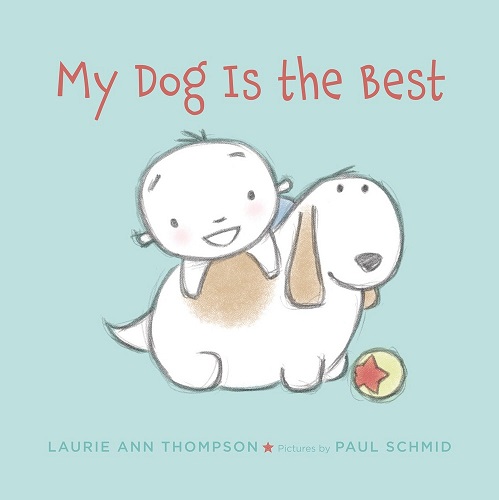
Finally, School Library Journal recently called my upcoming release “well-executed and charming.” I can’t give this one away just yet (it will release on June 9, 2015), but feel free to share the MY DOG IS THE BEST love by adding it to your Goodreads shelf and/or pre-ordering it at one of the following links:
Secret Garden Books (for a signed copy, please leave an extra week or so for delivery and indicate how you’d like it personalized in the “other notes about your order” field).
And, just for fun, here’s a cool video that John Schu made of the window display at Unabridged Bookstore in Chicago. It’s in great company, don’t you think? It’s always exciting to see one of my books out in the wild, so if you spot one, please share!


 It’s a huge honor to announce that Be a Changemaker has won the Society of Children’s Book Writers & Illustrators’ (SCBWI) Crystal Kite Award for the West division, which includes Washington/Oregon/Alaska/Idaho/Montana/North Dakota/South Dakota! This award is voted on by other SCBWI members, who are also authors and illustrators, so it’s especially rewarding to be recognized.
 Winning is a bit bittersweet, though. First, there were so many great books in the overall list of eligible titles (including the one I voted for, which didn’t make the finals). Second, the other three finalists are all fantastic books, written by a trio of lovely authors whom I’m glad to call my friends. I honestly would’ve been just as happy to see any of these fine books win as I am to see my own. If you haven’t seen these yet, please check them out!