Last month, I blogged that I was going to to do two big challenges: the picture book marathon and the WordPress PostAWeek. I’ve pretty much been keeping up with the WordPress PostAWeek challenge. I think I’ve put up some good posts so far, but I’m still a little disappointed with the results. I was hoping to get a little more inspired, get a lot more into the flow of regular blogging, and get more comfortable sharing more about what I’m learning and doing. Perhaps that will come in time. After all, I’ve been fairly well consumed by the Picture Book Marathon all this month, too!
The PB Marathon is a challenge “during which children’s writers compose one picture book each day until they have written 26 picture books.” Today is day 14, and I’m pleased to say I’m half way there! So far, I’ve written 13 brand-new picture books including everything from nonfiction science and biographies to purely fictional goofiness to traditional folktale retellings. It’s been a lot of work, but I have definitely learned that I can commit to a daily writing practice. (Well, Monday through Friday, anyway. Weekends have been nearly impossible!) I’ve also been pleasantly surprised by the results. I was expecting perhaps two out of 26 to be worth pursuing, but so far, I think maybe there are only about two that should probably just be deleted right now. Some are better than others, of course, but I think most of them do have the potential to be developed into something interesting. And since I like doing revision much better than writing first drafts, I’ll be set for quite some time (although I am definitely going to continue with some type of new writing work every day—just not a whole book)!
So, February is half over. And 2011 is looking to be a very productive year. Over the hump and on down the other side!
Laurie Thompson
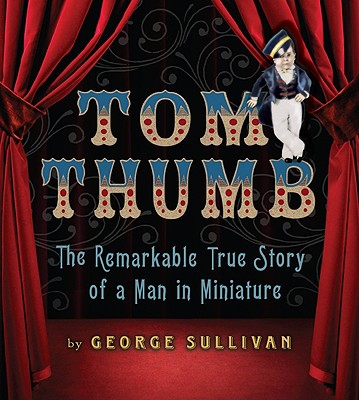
Review: Tom Thumb
TOM THUMB: THE REMARKABLE TRUE STORY OF A MAN IN MINIATURE
I just finished an advance reading copy of TOM THUMB: THE REMARKABLE TRUE STORY OF A MAN IN MINIATURE by George Sullivan (Clarion; February, 2011; 208 pages; grades 5–9).
Writing non-fiction is like putting together the pieces of a puzzle, says author George Sullivan… “I like nonfiction because I’m a very curious person, and the research that I do I find introduces me to new worlds,” he said. “I’m always interested in finding out what people were really like—how they live, what the family life was like, what motivated them.” (full article here)
I think he succeeds in conveying that sense of curiosity and wonder to his readers, and TOM THUMB should be of great interest to middle-graders for both pleasure reading and researching reports.
In TOM THUMB, Sullivan pieces together the puzzle behind the real-life story of Charles Sherwood Stratton (a dwarf who would later become famously known as Tom Thumb), as well as those of P.T. Barnum and Tom Thumb’s wife, Lavinia.
Written as a narrative, the text chronologically follows Tom Thumb’s life and beyond, weaving an interesting biography and tale of history and showmanship. Sullivan treats his subject with careful dignity and respect.
In addition to the story itself, librarians, teachers, and researchers will appreciate the attention to backmatter, including acknowledgements, about the sources, end notes, bibliography, books and articles list, and an index.
In my mind, the book also raises some interesting opportunities for discussions in classrooms and children’s book clubs:
- The book makes it clear that Tom Thumb apparently enjoyed playing his roles and living life as a performer in the public eye, but others, most notably Barnum and Tom Thumb’s own parents, also profited from his on-stage antics. At what point does it constitute exploitation to treat people this way? What factors might have made it acceptable historically? How is it different today? What types of exploitation, if any, still exist today? Should they be banned?
- The book reveals Barnum’s skills in self-promotion, marketing, and knowing what audiences wanted and were willing to pay for. It also reveals several knows cases of “humbuggery,” or instances where he knowingly deceived audiences to draw bigger crowds and more profit. Is this behavior acceptable for a “showman?” What might “humbuggery” look like today, and how do we try to protect consumers from it? Are we successful? How can we be on the lookout for “humbuggery” in today’s media?
Sullivan has written more than 100 books for children, and he’s still writing in his 80s. He shared some of his tips here, including:
“I write very early in the morning, when my mind is fresh and when I know I’m not going to be interrupted by the telephone or visitors or whatever might occur during the day,” he said. “I do a great deal of work in the early morning hours.”
And,
“You take the project and you break it into pieces,” he said. “You have an outline that breaks it down into different categories. Then you research each of these pieces, instead of trying to do everything all at once.”
Good advice. And Sullivan has certainly built a book, and a career, worth emulating.
Review: The Many Faces of George Washington
I recently signed up for NetGalley.com, which lets publishers connect their upcoming books with reviewers, media, librarians, booksellers, bloggers, and educators. It’s easy to use, helps me keep up with what’s happening in the market, and—lucky for you!—it allows me to share these new works I love with my blog readers!

The first book I downloaded was one I’d heard about the NFforKids Yahoo group for nonfiction children’s book writers. THE MANY FACES OF GEORGE WASHINGTON: REMAKING A PRESIDENTIAL ICON, a middle-grade available on 4/1/2011 from Carolrhoda Books, was written by friend and former SCBWI regional advisor Carla Killough McClafferty. I found the unique concept to be extremely intriguing. The following is excerpted from the front flap copy:
“George Washington’s face has been painted, printed, and engraved more than a billion times since his birth in 1732. And yet even in his lifetime, no picture seemed to capture the likeness of the man who is now the most iconic of all our presidents… In 2005 a team of historians, scientists, and artisans at Mount Vernon… tapped into skills as diverse as eighteenth-century leatherworking and cutting-edge computer programming to assemble truer likenesses.”
I was not to be disappointed, and gobbled this 120-page book up in a single afternoon. Equal parts history and technological thriller, THE MANY FACES OF GEORGE WASHINGTON brilliantly alternates between the historical context of the man and the modern-day techniques used to rediscover his real appearance. Below, Carla graciously shares some insights and behind-the-scenes information on how this amazing book came to be.

LT: How did you find out about this fascinating story of recreating George Washington’s likeness, and what made you decide to pursue it as a middle-grade nonfiction book?
CKM: I love to watch The History Channel—which comes as no surprise since I write nonfiction books about historical topics. One day in 2007, I watched a documentary titled The Search for George Washington. It showed how Mount Vernon brought together a team of experts from the fields of science, history, and art in order to find out what George Washington really looked like. Their work resulted in three life-sized representations of Washington at the ages of 19, 45, and 57, which are exhibited at Mount Vernon. I was fascinated by the project. The 3D scanner images of the Houdon bust made me sit up and take notice—probably because my first career is as a radiologic technologist. The idea for THE MANY FACES OF GEORGE WASHINGTON: REMAKING A PRESIDENTIAL ICON was born as I watched that documentary. I recognized immediately that this new information discovered by the Mount Vernon team would provide a fresh look at George Washington that would perfect for a book. I love to write for a middle-grade audience because they already have a general knowledge of many things, but they are willing to add deeper layers to their understanding.
LT: What kind of reader do you think this book will appeal to?
CKM: I work hard to make sure my books can be read, understood and (hopefully) enjoyed by readers from ten years old through adulthood. I write simply and explain everything—but I write about complex topics. What I hope is that a ten year old reader understands the text without a struggle—and an adult reader does not feel they are reading a kid’s book. Regardless of the age of my readers, my goal is to interest them in a topic they didn’t know they would be fascinated by, and write it in such a way that the information will stay with them.
LT: I think you’ve definitely achieved that here, through both the way the book is written and the wide variety of subject areas it covers: art, history, science, technology. What was your favorite part to research and write? What was the hardest part for you? How did you deal with that?
CKM: Every part of this book was enjoyable for me. But if I had to say, it would be that I loved getting to know George Washington as I researched his life. I began this project with very little knowledge of Washington or the American Revolution. As I studied, I began to understand how amazing this man was, and how astonishing it is that America won independence. I’ve even come to think that without George Washington—the war might have NOT have been won.
CKM: My favorite part relating to the creation of the Washington figures was getting to know many incredible people involved in the project. I absolutely love the folks at Mount Vernon. Diana Cordray, the education center manager/special projects coordinator, has helped me in a thousand ways. It was also a treat to get to know the artists Steven Horak, Sue Day and Stuart Williamson and watch them work. I now count these amazing people among my friends.
CKM: The hardest part was locating many of the people who contributed to the project in various ways in order to interview them. I kept asking questions and searching around until I found them.
LT: During your research, what surprised you the most?
CKM: The most surprising thing was the man, George Washington. He was handsome, dashing, and brave. He was the best horseman AND the best dancer in Virginia. Today we would say he was a “man’s man”. And the ladies liked him too.
LT: How much time did you spend researching overall, and how long did it take to write the book? How much time did you spend researching “on location?”
CKM: This book has taken three years from the time I really determined this is the book I just HAD to write until it was released. I’ve spent three weeks in Virginia, at Mount Vernon, Yorktown, and Colonial Williamsburg. I also spent a week in New York City doing research.
LT: How do you manage all of the research for a book like this? What’s your organizational system? Does it evolve over the course of a project?
CKM: My organizational system is constantly changing, and I’m always looking for better ways to work. For this book I read more than fifty books about George Washington. I bought most of them off of Ebay and Amazon so I could mark them up and make notes in the margins. In this way, I didn’t have to write massive notes; I could just refer back to the books themselves. Plus I have three huge Rubbermaid containers where I file notes and research from places other than books.
LT: Did you do all the photo research for the book too? Can you tell us about that process?
CKM: From the very beginning of my research on a book, I’m looking for the right images. It all happens at the same time, yet I understand that in the end some images must be deleted for space considerations in the end. I’m thrilled with the way the book looks. The design team at Carolrhoda did an amazing job.
LT: I agree. The end result is gorgeous! Another thing I love is the way the book is structured, with the buildup of the problem and their approach to solving it, followed by alternating historical chapters and modern-day re-creation chapters. I think this approach really serves to engage both types of readers, those more interested in the history as well as those more interested in technology, to keep reading and learn new things in both areas. Rather than stick to chronological order or present both stories separately, how did you arrive at this particular structure?
CKM: How to structure the book was one of the most difficult issues of this project because the scientific investigation went backwards in time, from older Washington to younger Washington. I considered doing it countless ways, but each way presented challenges and problems. In the end, Andrew Karre, my wonderful editor at Carolrhoda, felt it would be best to go back and forth between the figures and the biographic material. From there, I had to figure out how to make it work. It was a challenge because I had to figure out how to deal with the reverse order of the de-aging process, start the bio section with young George Washington, and not backtrack to the science.
LT: What did you learn from this book, as a writer, that you’ll be able to apply on future projects?
CKM: For my last book, In Defiance of Hitler: The Secret Mission of Varian Fry, I researched and wrote at the same time—and I finished that book faster than any of my other books. With this George Washington book, I spent months reading book after book without writing any text. In the end, this gave me a good foundation about Washington and the Revolution, but it slowed down the whole process. I won’t make that mistake again. In the future, I’ll research and work on the text at the same time.
LT: What was your revision process like, including how many times you revised and at what stage(s) of the process?
CKM: When I get a good rough draft and I go through the entire thing again and again and again until I think it is right. I revise it keeping the entire book in mind since what I write on one page influences what comes later and before. I don’t keep track of how many times I revise the entire manuscript before sending it out—I just keep working until it is done.
LT: Tell us about the pitch and sales process you went through with this book. How much did you have researched and written when you pitched your agent (Susan Cohen at Writer’s House)? And when she then pitched it to editors?
CKM: I talked to my agent Susan Cohen about it and she suggested I write a proposal. She read the proposal and suggested some changes. I did a lot of research before I was able to write the proposal in a way that would reflect what I wanted to do in the book. My previous books were with FSG, but my editor was no longer with FSG, so Susan began sending the proposal out about end of 2008 to other houses.
LT: You mentioned Andrew Karre at Carolrhoda was very supportive of the book’s concept and also had some input into the structure of the information. Can you tell us what it was like working with Carolrhoda, and how it might have differed from other publishers for your previous books?
CKM: Andrew Karre is an excellent editor and has been wonderful and. From the first day, he was enthusiastic about the book and saw the project the way I did. During revisions, he had suggestions on adding or omitting material. I considered his edits carefully, but in the end he would give me the final say on what to do with it. He trusted me as the author, and I trusted him as the editor. It must work both ways.
CKM: My other books have been with FSG. I worked with two different editors there through the years, Robbie Mayes and Beverly Reingold. Both of them were excellent editors. I’d say the biggest difference between working with FSG and with Carolrhoda is that at FSG we worked on a physical hard copy of a manuscript and with Carolrhoda, Andrew and I worked on an electronic manuscript.
LT: What are you working on next?
I’ve always had to finish one project completely before I move on to the next one. Now that The Many Faces of George Washington: Remaking a Presidential Icon is out, I need to decide. But it seems I’m not quite ready to let go of George Washington—maybe there is another book there somewhere.
LT: Carla, thanks so much for sharing such detailed and honest answers with us!
CKM: Thank you! It is always so much fun to talk about my books when they finally come out.
I encourage you to find out more about Carla and The Many Faces of George Washington here!
I’m off to NYC for #NY11SCBWI!
I have to admit, I’m a little more nervous about attending the SCBWI conference in NY this year. Yes, they’re going to have great speakers (Lois Lowry! Jane Yolen! R. L. Stine! Mo Willems! and plenty of other wonderful people!). And yes, there will be agents, editors, and publishers there. But I’ve gotten fairly used to that by going to so many great SCBWI events over the last few years. No, that’s not why I’m nervous.
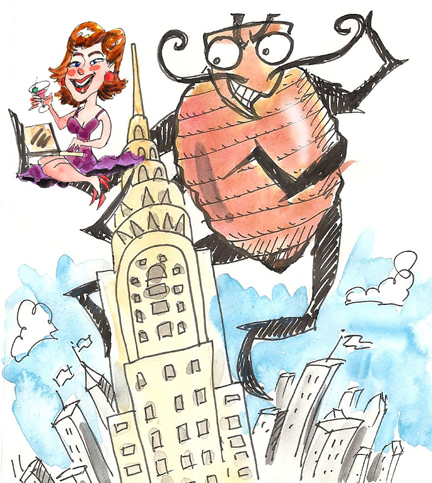
I’m nervous because NYC has been called “the bedbug capital of the world.”

I guess that’s supposed to be me, although the incredibly talented Dana Sullivan must have missed my tweet about packing to stay warm and only wearing comfortable shoes this trip (sorry NYC fashionistas, but it’s not like I had a chance anyway). And a martini? Perhaps he also doesn’t know I’m more of a Guinness-girl. At the very least, cocktails should definitely not have vegetables in them. Besides that, though, Dana’s pure brilliance. You can see more funny things from him, or even sign up to receive one by email every week, here.
Anyway, I’ve got plastic bags for all my clothes, I plan to keep my suitcase and clothes off the floor at all times, and I WILL be checking the bed and room when I arrive. So, let’s hope the only new things I bring back home with me are books.
Wish me luck!
New year, new commitments
I’m usually pretty big on reflecting on the past year, re-evaluating, and setting goals (not so much resolutions) around the start of each new year. Starting into this year, though, I just didn’t really have any. Am I just happy where I’m at—coasting along with magazine articles but no books contracted yet? Certainly not! But everything I came up with—everything I know I need to do—sounded too big and too scary for me to actually commit. Me, a commitment-phobe? Not generally, no. I was confused and disheartened by my apparent total lack of resolve. And, I was beginning to lament that January was half over and I STILL hadn’t come with any reasonable goals that I felt I could stick to.
Enter serendipity.
First, I stumbled upon a relatively new blog written by a new member of the NFforKids Yahoo group, Carole Bruce Collett. One of her posts mentioned that she’s doing the WordPress Post A Week 2011. Intrigued, I checked it out. Wow, they not only ask me to commit to post once each week in 2011, they also send reminders, prompts, and inspiration! Okay, maybe I can do that. I mean, I will do that! So, watch for at least a post each week. I won’t promise they’ll all be good, though!

Then, I saw a post about the second annual Picture Book Marathon on SCBWI Western Washington’s Chinook Update blog. Participants commit to write 26 picture books during the month of February (leaving just two well-deserved rest days). One of the things I was trying to commit to was writing every day, writing more new work, writing just for fun. But all of those things were too big. One month, 26 picture books? Measurable. Doable. 26 days. And they offer “training” emails! (Are you sensing I need a little hand-holding?) I got in just before the first training email, and I am psyched! But I won’t promise ANY of these will be good!
I love the writers’ community that is growing out there in cyberspace. I love the support and encouragement I get from “the tribe,” even those I’ve never met, and may never meet, in person. ‘Tis a fabulous thing we do, and ‘tis done by fabulous people. Thanks for reading!
Some recent reads: great narrative nonfiction

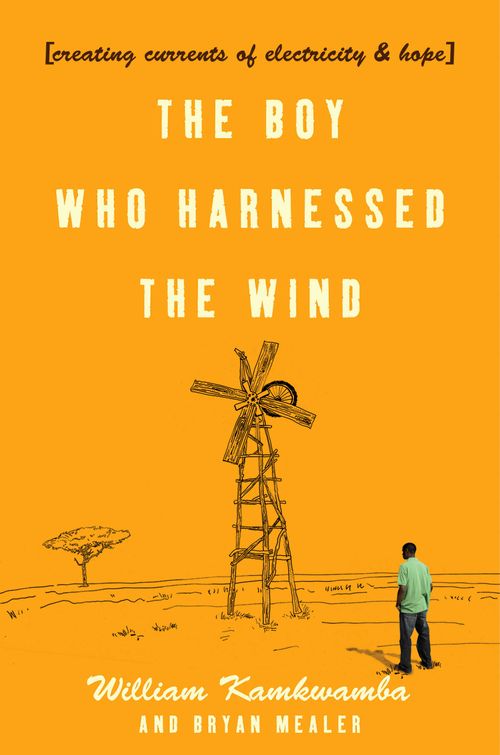
Most of my recent reading has been creative or narrative nonfiction. Before the holidays, I was reading THE BOY WHO HARNESSED THE WIND by William Kamkwamba and Bryan Mealer. I’m in awe of, and frankly a little intimidated by, the level of detail they go into. I don’t think I’d ever be able to interview a subject enough to get that kind of background. Of course, in this case, the subject is also one of the authors, so maybe that collaboration is the secret.

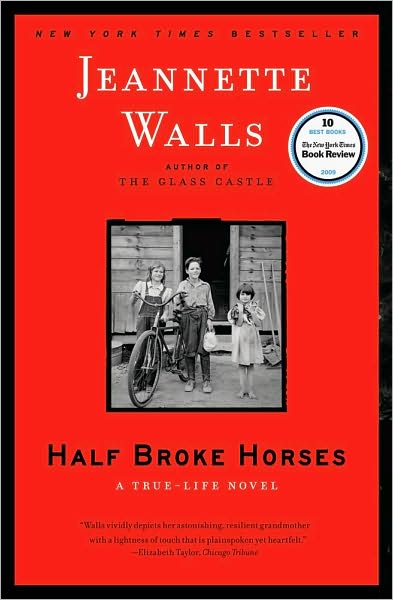
For Christmas, my husband got me Jeannette Walls’ HALF-BROKE HORSES. It’s fiction, but was heavily researched and based on the true life story of the author’s grandmother. I think a nonfiction writer can learn a lot by studying this book. The writing is simple, engaging, and beautiful all at the same time. The biggest take-away from this one, though, is voice. As a reader, you can hear the grandmother’s voice and feel her personality while you’re reading, and that, in turn, allows you sneak peeks inside her character and go beyond what the author is telling you directly.

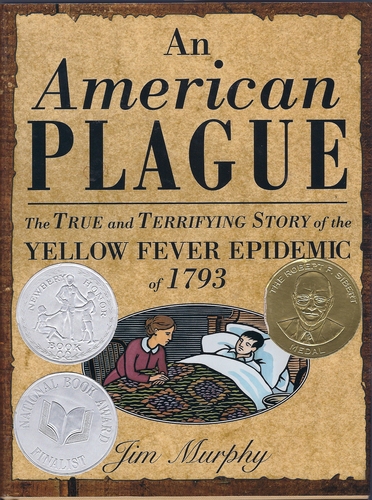
Santa brought my daughter Jim Murphy’s AN AMERICAN PLAGUE: THE TRUE AND TERRIFYING STORY OF THE YELLOW FEVER EPIDEMIC OF 1793. (Santa has good taste in books, no?) This book is pure nonfiction, but it reads like a novel. The strong development of the setting feels like you are right there Philadelphia (thank goodness it doesn’t have scratch and sniff stickers!). The tension is rising at a fever pitch (forgive the pun) as the fever itself spreads. And the writing is pure poetry. Check out this closing paragraph of Chapter 2:
“On Saturday, August 25, a savage storm hit the city, bringing winds and torrents of rain. Water cascaded of roofs, splashed loudly onto the sidewalks, and ran in burbling rivers through the streets. The howling wind and pounding rain made a frightful noise, and yet through it all a single, chilling sound could still be heard—the awful tolling of the church bells.” [they rang the bells to announce a death]
My technical writer/journalist tendencies would have been to say something like, “x number of people died that day.” Concise, factual… and boring! The paragraph above does so much more. Then, the closing paragraph of Chapter 3 kicks it up another notch:
“Philadelphia was a city in panic and flight. It did not even help when Mayor Clarkson acted on another recommendation from the College of Physicians. The tolling bells that had so thoroughly terrified everyone were ordered to remain still. The great silence that followed did little to comfort those left behind. It was too much like the eternal silence of the grave.”
Chills, right? And that’s only Chapter 3.
I also love the design of this book. The facing page of every new chapter is a photographic reproduction of a primary source relevant to the chapter: a newspaper page, letter, government report, etc. You can gloss over them if you want without missing any of the story, but you can also find yourself reveling in the thrill of going through the primary source material for yourself. I love that they chose to do it this way, especially in a book for children.

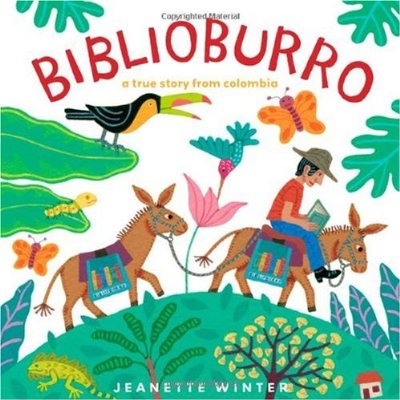
Finally, I recently read the picture book BIBLIOBURRO by Jeanette Winter. This book is so simple, so concise, but yet so beautifully told. The artwork is gorgeous, but it’s also a masterpiece of saying everything you want to say, and nothing more. What struck me as particularly interesting about this one is that she chose to tell the whole story in present tense, even though the point in time changes part of the way into the story! And it works.
Another thing that struck me about this book is the subject. It’s about someone no one (at least in the U.S.) has ever heard of delivering books to remote villages by burro. Having been told that you can’t sell a book these days about someone no one has ever heard of, no matter how interesting their story is, I’m thrilled to see that a respected publisher like Beach Lane Books took a chance on this one. I hope they continue to seek out those interesting yet underreported stories that more of us need to hear about.
What are your recent nonfiction favorites, and what makes them stand out for you?
The interview tightrope
I’ve been working on and off for years on a biography for kids. It’s getting really close, but there’s still something missing. In a few weeks, though, I finally get to meet and interview the subject, Emmanuel Osofu Yeboah, in person! No, I’m not flying to his home in Ghana (bummer), but he’ll be in San Diego this month after riding in the Challenged Athlete’s Foundation Million Dollar Challenge (a seven-day, 620-mile bike ride down the California coastline from San Francisco to San Diego). The meeting is scheduled, and the plane tickets are purchased. Yay!
On one hand I’m shaking with excitement about meeting him simply because he’s a personal hero of mine. I find him to be so interesting and his story to be so inspirational. In the five years since I first heard of him and his accomplishments, I’ve not grown tired of reading, talking, or writing about him.
And I’m absolutely thrilled to get the chance to interview him in person. The phone and email interviews haven’t been as productive as I’d like; they always feel way too formal. An in-person interview will hopefully allow me to finally fill in some of the gaps in my research. Even more importantly, I want my readers to really get to know him. If I have gotten to know him myself, I’ll have a much better chance of sharing his character with my readers.
I also want to reassure him that I’m serious about this project, and not a dreamer or a freak. (Okay, so it may be fair to say I’m both of those things, but not about this project!) An in-person interview feels like the piece that’s been missing all along. I believe it will allow me to, finally, make this manuscript into a book.

That’s where the nerves come in, though. What if he does think I’m too much of a dreamer or a freak? What if go all fan-girl on him and can’t think straight? What if I go too far the other way and come off as too forceful, too serious? What if I can’t establish the connection I’m looking for or don’t get the answers I need? Whatever the reason, if I can’t take the manuscript to the next step after this interview, will I ever be able to get it there? It’s feeling a bit like do or die time.
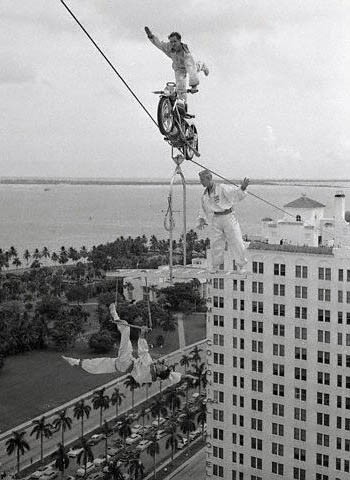
So, I’m feeling all the excitement and nerves of a tightrope walker before the big event. I want to be prepared to get all that I need as an interviewer (because I might not get another chance), but I don’t want to get so focused that I miss the opportunity to make a human connection with an amazing individual.
Any tips on striking the right balance?
Writing to Change the World
Recently, Vicki Cobb posted on the I.N.K. (Interesting Nonfiction for Kids) blog about writing to change the world. I’ve been pondering this post for days. On one hand I think all authors, especially those of us who right nonfiction for kids, are trying to change the world to some degree (maybe more than Vicki alludes, even). Yet that seems like such a lofty, overblown, and, dare I say pretentious?, goal–one that many of us would hesitate to say out loud (thank you, Vicki!). After all, as beginning writers we are told over and over again, “Don’t teach!” Of course, nonfiction by its very nature must teach. So I’ve struggled with balancing my desire to teach, inspire, empower and yes, influence young readers with the need to remain impartial and simply tell the story. Not enough emotion and the writing is dry and boring. Too much passion and it comes off as overzealous and preachy. Striking a healthy balance is where the work, and the magic, lies.
Today I attended a writing intensive offered by Carmen T. Bernier-Grand. One of the exercises she had us do was simply to make a list of the reasons we we write. Here is what I wrote:
Why do I write? I write:
- to empower children
- to give kids a voice, especially those who haven’t yet felt heard
- to teach
- to help kids discover their authentic selves
- to help them honor and respect those authentic selves
- to share what is important to me with future generations
- to make the world a better place going forward
In short, I do write to change the world, one reader at the time. I guess I’ll just try to keep it a secret from the kids.
Alchemy and Karen Cushman!
Oh, this is so much fun! Not only is there a brand-new book out from one of my all-time favorite authors, but I got to read an early copy (squeee!) and interview the author for my blog (huzzah)!
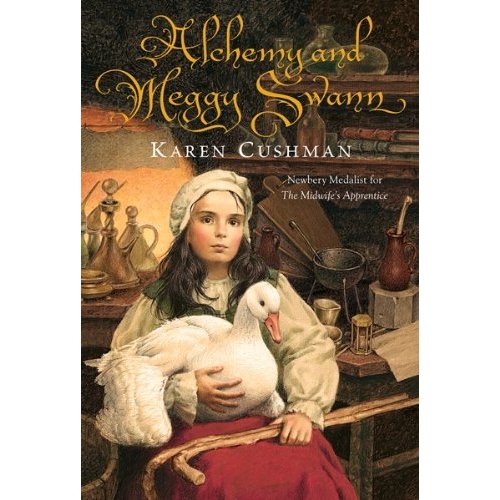
First, let me gush a little about how much I enjoyed reading Alchemy and Meggy Swann. There’s an awful lot for readers of any age to love in this little book: from the opening scene where we start right in with action and a bit of a mystery, to the feisty but kind-hearted heroine, to the historical richness, to the wonderful array of creative insults. It’s truly got something for everyone. If you’re not already a fan of Karen Cushman, this book will surely transform you into one. And now, let’s meet the alchemist herself—welcome, Karen!
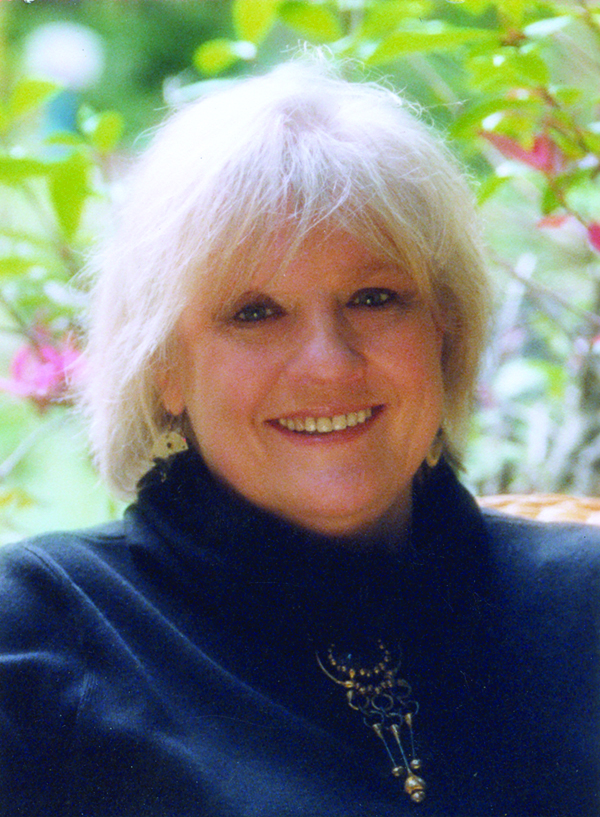
LT: First, I love the parallels between the father’s search for alchemical transformation and Meggy’s personal transformation. What made you start thinking about alchemy as a book subject, and was the parallel planned from the outset?
KC: I found alchemy an intriguing idea but didn’t really have an idea about how I’d use it in a book until I thought more about transformation, about that very parallel between alchemical and personal transformation. I love how the ides of change works for both and how transformation may not happen exactly as they wanted or expected.
LT: I think you really gave us an accurate portrayal at what it’s like to feel different and/or unwanted and the misguided but all-too-common defense mechanism of pushing people away before they can reject us, and it is these understandable flaws that make Meggy such an interesting and universally appealing character. Did you know you were shooting for that at the start, or did those aspects of character evolve naturally as you wrote the story?
KC: Meggy started out much sweeter and more compliant but as I understood more about her and her struggles, I realized she probably would not have responded or acted in such understanding ways. So, yes, those aspects of character evolved as I wrote the story.
LT: I find it fairly difficult (but extremely entertaining) to picture you hurling insults at anyone, but Meggy seems to have no trouble whatsoever. How exactly did you come up with Meggy’s many inventive invectives?
KC: I found an invaluable little book called Shakespeare’s Insults and borrowed some of those. And there is a website called the Shakespearean Insult Kit (www.pangloss.com/seidel/shake_rule.html) that allowed me to come up with intriguing combinations. It was great fun.
LT: I can tell you did a ton of research for this book. Do you think you’ll reuse any of it in future stories? Will we see Meggy again? (I need to see her reunited with her goose!)
KC: I hadn’t planned on a Meggy sequel but young readers have said they like the idea. First I’d have to finish a new book, Will Sparrow’s Road, where I will use a lot of what I learned about Elizabethan England.
LT: How about nonfiction? I’m a primarily nonfiction writer who dabbles in research-based fiction when something I’m researching gets my imagination going. Have you ever or do you think you will ever dabble in nonfiction? You’ve certainly got the research part down!
KC: So far it’s the “what if?” of stories that has my attention. I love sitting in my chair and making things up. But I dabble in nonfiction when I write my author’s notes. The notes for Meggy Swann were especially fun to do.
LT: I love that you “like to write about gutsy girls figuring out who they are,” and I love gutsy girls, even if some of us don’t get gutsy or figure out who we are until we’re actually middle-aged women (who, me?). Which real-life gutsy girls (and women) have inspired you most?
KC: Some of my female heroes are Jane Addams of Chicago’s Hull House, the anthropologist Margaret Mead, Eleanor Roosevelt, and genius illustrator Trina Schart Hyman—all gutsy girls.
LT: I’ve always said that I’ll feel like a successful writer when I receive one letter from a reader saying that my book helped them in some way, and you’ve said that connecting with readers is what makes you feel proudest of your work. What’s the best letter you’ve ever received from a reader?
KC: I got a wonderful letter that said, “I never read one of your books but now that you’ve come to my school, I am considering trying to read one.” But I treasure the ones that say “I never thought about that before but…” or “Since I read your book, I know there are other people who feel like I do.”
LT: Alchemy and Meggy Swann, even more so than your other books, I think, is a shorter book with more difficult language. Was there ever any question, from you or your publisher, about audience, age, and/or reading ability?
KC: No, I think Dinah, my editor, thinks as I do that we should give young people more credit for their understanding. And I tried to use words that could be understood through context or onomatopoeia. It was great fun searching thesauruses and the Oxford English Dictionary.
LT: I love that answer and completely share the belief that we should challenge and believe in children rather than sell them short. Since you mentioned Dinah, can you tell us what it’s like to work with the legendary Dinah Stevenson?
KC: Legendary? Is Dinah old enough to be legendary? I was assigned to work with Dinah when Clarion bought my first book–an amazing stroke of luck. Dinah is a great editor, intelligent, insightful, and not at all pushy, and she makes my work much better and richer than it would be without her. That doesn’t mean I don’t snarl and throw things when I get one of her famous 17-page editorial letters, and I don’t follow every suggestion she makes but I do think about them carefully. And she always reminds me it’s my book and I should write it my way.
LT: Age has nothing to do with it—only the esteem she’s earned within the industry! You’ve been very loyal to Dinah and to Clarion over the years (and I must admit that Clarion is one of my dream publishers!). They’re interesting because they’re a rather small imprint with a small list, but owned by a huge conglomerate. How do think this has helped or hurt you?
KC: I think Clarion’s small size has meant there’s a smaller list and fewer other authors. I can have a personal relationship with everyone on the staff and feel they know me. I like that. And I’m sure the support Clarion gets from Houghton Mifflin Harcourt benefits me in ways I don’t even know. So far I have felt no drawbacks.
LT: Finally, any advice for up-and-coming wanna-be’s?
KC: I tell most women who come to me for advice that they probably are just too young yet—I was fifty, after all, before I started writing. Beyond that I recommend what most writers do—lots of reading, much writing, critique groups, and support groups of like-minded folks like the SCBWI.
LT: Phew, that’s good to know—I’ve got a few more years yet. What a relief! Thanks so much, Karen. As always, it was wonderful to talk with you, made even more so by having such a delightful book to discuss.
** Disclaimer: I received a free advance review copy of this book from the publisher.

Good news: ONE IS ENOUGH won an award!
In my last post, I was so busy gushing about the conference awesomeness I forgot to mention the best news of all!
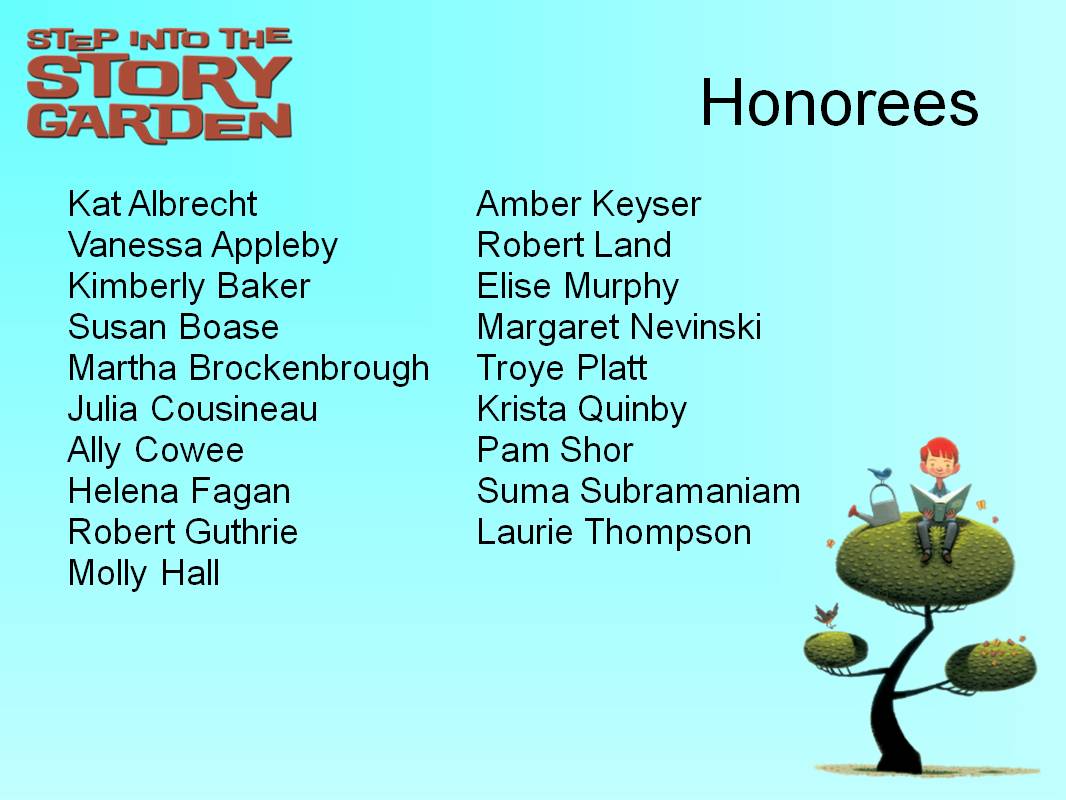
My manuscript for ONE IS ENOUGH, a picture-book biography about Emmanuel Ofosu Yeboah, was one of those nominated for the SCBWI Western Washington 2010 Outstanding Work-in-Progress awards! Here’s the official slide:

This award is given by the faculty manuscript consultants, who select their favorite manuscripts–those they feel show the most promise of being eventually published–for the honor. I am especially tickled because my consultation was with an editor I really like personally who works for a publishing imprint whose list I would be incredibly honored to be a member of. Better yet, her revision notes make perfect sense to me. Of course, I still have to find a way to implement them.
Congratulations to all of the honorees! Now let’s get back to our keyboards, use what we’ve learned to polish those manuscripts until they shine, and then summon the courage to send them out into the world. I’ll be keeping my fingers crossed!