I have to admit, I’m a little more nervous about attending the SCBWI conference in NY this year. Yes, they’re going to have great speakers (Lois Lowry! Jane Yolen! R. L. Stine! Mo Willems! and plenty of other wonderful people!). And yes, there will be agents, editors, and publishers there. But I’ve gotten fairly used to that by going to so many great SCBWI events over the last few years. No, that’s not why I’m nervous.
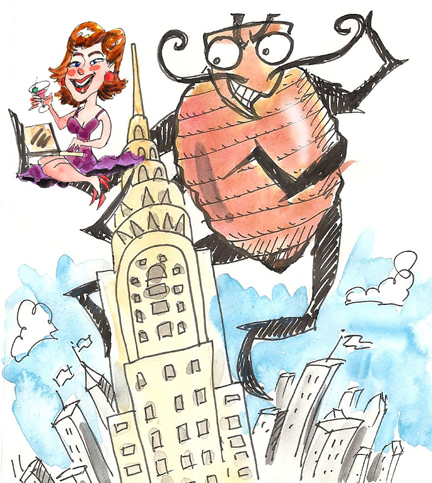
I’m nervous because NYC has been called “the bedbug capital of the world.”

I guess that’s supposed to be me, although the incredibly talented Dana Sullivan must have missed my tweet about packing to stay warm and only wearing comfortable shoes this trip (sorry NYC fashionistas, but it’s not like I had a chance anyway). And a martini? Perhaps he also doesn’t know I’m more of a Guinness-girl. At the very least, cocktails should definitely not have vegetables in them. Besides that, though, Dana’s pure brilliance. You can see more funny things from him, or even sign up to receive one by email every week, here.
Anyway, I’ve got plastic bags for all my clothes, I plan to keep my suitcase and clothes off the floor at all times, and I WILL be checking the bed and room when I arrive. So, let’s hope the only new things I bring back home with me are books.
Wish me luck!
Personal
New year, new commitments
I’m usually pretty big on reflecting on the past year, re-evaluating, and setting goals (not so much resolutions) around the start of each new year. Starting into this year, though, I just didn’t really have any. Am I just happy where I’m at—coasting along with magazine articles but no books contracted yet? Certainly not! But everything I came up with—everything I know I need to do—sounded too big and too scary for me to actually commit. Me, a commitment-phobe? Not generally, no. I was confused and disheartened by my apparent total lack of resolve. And, I was beginning to lament that January was half over and I STILL hadn’t come with any reasonable goals that I felt I could stick to.
Enter serendipity.
First, I stumbled upon a relatively new blog written by a new member of the NFforKids Yahoo group, Carole Bruce Collett. One of her posts mentioned that she’s doing the WordPress Post A Week 2011. Intrigued, I checked it out. Wow, they not only ask me to commit to post once each week in 2011, they also send reminders, prompts, and inspiration! Okay, maybe I can do that. I mean, I will do that! So, watch for at least a post each week. I won’t promise they’ll all be good, though!

Then, I saw a post about the second annual Picture Book Marathon on SCBWI Western Washington’s Chinook Update blog. Participants commit to write 26 picture books during the month of February (leaving just two well-deserved rest days). One of the things I was trying to commit to was writing every day, writing more new work, writing just for fun. But all of those things were too big. One month, 26 picture books? Measurable. Doable. 26 days. And they offer “training” emails! (Are you sensing I need a little hand-holding?) I got in just before the first training email, and I am psyched! But I won’t promise ANY of these will be good!
I love the writers’ community that is growing out there in cyberspace. I love the support and encouragement I get from “the tribe,” even those I’ve never met, and may never meet, in person. ‘Tis a fabulous thing we do, and ‘tis done by fabulous people. Thanks for reading!
Some recent reads: great narrative nonfiction

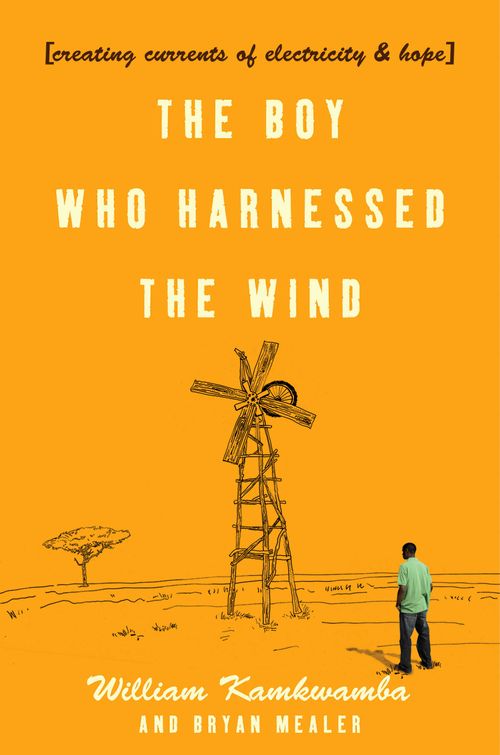
Most of my recent reading has been creative or narrative nonfiction. Before the holidays, I was reading THE BOY WHO HARNESSED THE WIND by William Kamkwamba and Bryan Mealer. I’m in awe of, and frankly a little intimidated by, the level of detail they go into. I don’t think I’d ever be able to interview a subject enough to get that kind of background. Of course, in this case, the subject is also one of the authors, so maybe that collaboration is the secret.
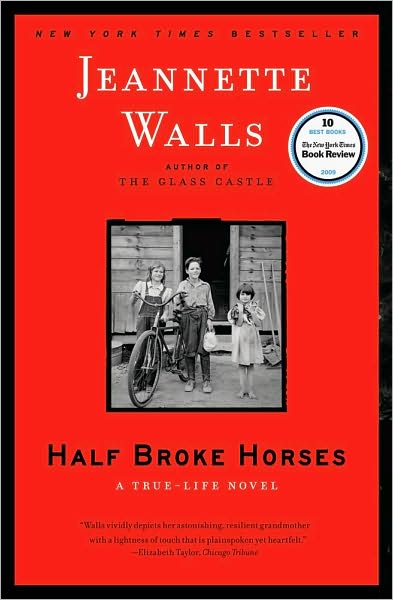
For Christmas, my husband got me Jeannette Walls’ HALF-BROKE HORSES. It’s fiction, but was heavily researched and based on the true life story of the author’s grandmother. I think a nonfiction writer can learn a lot by studying this book. The writing is simple, engaging, and beautiful all at the same time. The biggest take-away from this one, though, is voice. As a reader, you can hear the grandmother’s voice and feel her personality while you’re reading, and that, in turn, allows you sneak peeks inside her character and go beyond what the author is telling you directly.
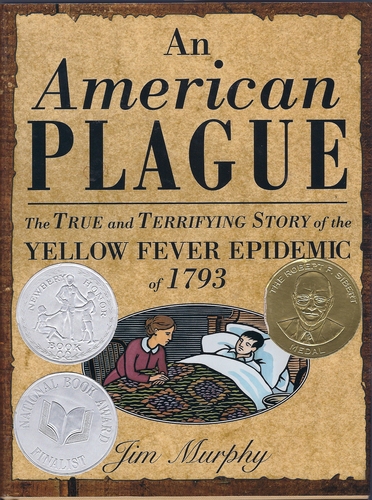
Santa brought my daughter Jim Murphy’s AN AMERICAN PLAGUE: THE TRUE AND TERRIFYING STORY OF THE YELLOW FEVER EPIDEMIC OF 1793. (Santa has good taste in books, no?) This book is pure nonfiction, but it reads like a novel. The strong development of the setting feels like you are right there Philadelphia (thank goodness it doesn’t have scratch and sniff stickers!). The tension is rising at a fever pitch (forgive the pun) as the fever itself spreads. And the writing is pure poetry. Check out this closing paragraph of Chapter 2:
“On Saturday, August 25, a savage storm hit the city, bringing winds and torrents of rain. Water cascaded of roofs, splashed loudly onto the sidewalks, and ran in burbling rivers through the streets. The howling wind and pounding rain made a frightful noise, and yet through it all a single, chilling sound could still be heard—the awful tolling of the church bells.” [they rang the bells to announce a death]
My technical writer/journalist tendencies would have been to say something like, “x number of people died that day.” Concise, factual… and boring! The paragraph above does so much more. Then, the closing paragraph of Chapter 3 kicks it up another notch:
“Philadelphia was a city in panic and flight. It did not even help when Mayor Clarkson acted on another recommendation from the College of Physicians. The tolling bells that had so thoroughly terrified everyone were ordered to remain still. The great silence that followed did little to comfort those left behind. It was too much like the eternal silence of the grave.”
Chills, right? And that’s only Chapter 3.
I also love the design of this book. The facing page of every new chapter is a photographic reproduction of a primary source relevant to the chapter: a newspaper page, letter, government report, etc. You can gloss over them if you want without missing any of the story, but you can also find yourself reveling in the thrill of going through the primary source material for yourself. I love that they chose to do it this way, especially in a book for children.
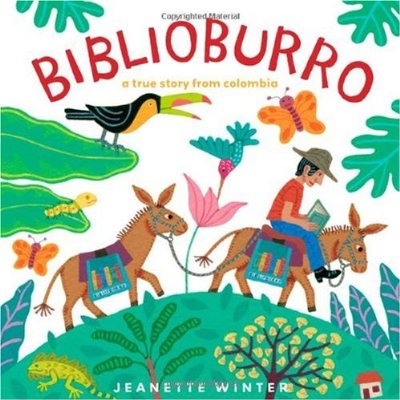
Finally, I recently read the picture book BIBLIOBURRO by Jeanette Winter. This book is so simple, so concise, but yet so beautifully told. The artwork is gorgeous, but it’s also a masterpiece of saying everything you want to say, and nothing more. What struck me as particularly interesting about this one is that she chose to tell the whole story in present tense, even though the point in time changes part of the way into the story! And it works.
Another thing that struck me about this book is the subject. It’s about someone no one (at least in the U.S.) has ever heard of delivering books to remote villages by burro. Having been told that you can’t sell a book these days about someone no one has ever heard of, no matter how interesting their story is, I’m thrilled to see that a respected publisher like Beach Lane Books took a chance on this one. I hope they continue to seek out those interesting yet underreported stories that more of us need to hear about.
What are your recent nonfiction favorites, and what makes them stand out for you?
Writing to Change the World
Recently, Vicki Cobb posted on the I.N.K. (Interesting Nonfiction for Kids) blog about writing to change the world. I’ve been pondering this post for days. On one hand I think all authors, especially those of us who right nonfiction for kids, are trying to change the world to some degree (maybe more than Vicki alludes, even). Yet that seems like such a lofty, overblown, and, dare I say pretentious?, goal–one that many of us would hesitate to say out loud (thank you, Vicki!). After all, as beginning writers we are told over and over again, “Don’t teach!” Of course, nonfiction by its very nature must teach. So I’ve struggled with balancing my desire to teach, inspire, empower and yes, influence young readers with the need to remain impartial and simply tell the story. Not enough emotion and the writing is dry and boring. Too much passion and it comes off as overzealous and preachy. Striking a healthy balance is where the work, and the magic, lies.
Today I attended a writing intensive offered by Carmen T. Bernier-Grand. One of the exercises she had us do was simply to make a list of the reasons we we write. Here is what I wrote:
Why do I write? I write:
- to empower children
- to give kids a voice, especially those who haven’t yet felt heard
- to teach
- to help kids discover their authentic selves
- to help them honor and respect those authentic selves
- to share what is important to me with future generations
- to make the world a better place going forward
In short, I do write to change the world, one reader at the time. I guess I’ll just try to keep it a secret from the kids.
SCBWI conferences: so many kinds of awesome
I’m finally starting to be able to come down from the high that was last weekend’s SCBWI Western Washington’s Writing and Illustrating for Children conference. After an extended period of not enough sleep, too much forced extroversion, and total detail overwhelm, I expected to be exhausted, but instead I was completely energized. It was so many kinds of awesome for me. I actually broke into tears driving home (the good kind, to be sure), and I’ve been walking around with a silly grin on my face ever since.

First of all, just being in the same room with that many people who care about the same thing I do is a gift. I’ve felt that at every writer’s conference I’ve ever been to, and that in itself is reason enough to go. As a recovering pleaser, I guess I’m still a total sucker for validation.
More than that, though, was the shift in my own reality. I had three goals for this conference:
- Try to relax and enjoy the moment. I have a strong perfectionist streak and can be a total control freak sometimes, but this year I was able to (mostly) just let go and make the best of it.
- Connect with people rather than their roles. I have always felt self-conscious around the faculty—those gatekeepers and success stories whom I so admire and respect—but this year I felt like I could’ve brought all of them home to my messy house for beer and burgers (probably more of a testament to their humility and grace than any personal growth on my part!).
- Get more comfortable speaking to a crowd. I have always been terrified of public speaking, but this year it was not only easy, it was actually fun!
I’ve wished and worked for these qualities all my life, and they finally chose to manifest themselves last weekend. I feel like Laini Taylor’s Magpie Windwitch, stuffing my most noxious demons into a fine glass bottle and pounding the cork in tight—banishing them to darkness where they can no longer exercise their evil powers.
So, the trick now is to go back to the solitary work of writing and revising without the task list spreadsheet, inexorable deadline, or golden “boss” pin. I can’t delegate anything away to my more competent friends, no one will be stopping me in the hall to thank me for my efforts, and there will be no standing ovation when it’s done. But I still have more goals to achieve (and more demons to banish), so it’s back to work I go with a renewed sense of confidence and optimism.
How about you: did you have pre-conference goals, do you feel like you achieved them, and what’s up next on your to-do list?
Ah, sweet rejection
My goal for this year is to receive as many as rejections as possible. I can be a little—okay, a lot—perfectionistic about where and when I send out submissions, so the intention of this goal was to push me to accomplish the part of publishing that I can control, submitting, and let go of the part I can’t control, selling. Unfortunately, this hasn’t worked out so well, as it seems most places either aren’t even reading the work or are only replying if interested, and are thus denying me of the small satisfaction of the rejection letter as proof I did SOMETHING. So, I think I will have to revise my goal and tweak my process so that I can celebrate, and tangibly see, every submission, whether I receive an answer or not. How do you do that without wasting paper? I’d love to hear your ideas!
There’s some good news, though (well, kinda)! Yesterday I received a rejection letter for a very beginning-level easy reader I’d sent to Scholastic’s Cartwheel imprint. I suspected it was probably not perfectly right for them, but I love them so much I just had to try (fighting that perfection thing again). Well, it was a rejection, but it was personalized, friendly, and discussed my particular manuscript and why they decided to pass. In fact, I have to agree with their assessment, although I still believe there’s a place for this manuscript with a different list. So, yes, it’s a little disappointing, but I’ll still send out a big virtual thank you to Scholastic/Cartwheel. I finally have something for the rejection file, and can at least revel in the success of failing!
‘Success is going from failure to failure with no loss of enthusiasm.’ —Winston Churchill
A poem for writers
For St. Patrick’s Day, my daughter had some fun writing limericks. Here is my favorite:
Writing
Write I will,
forever still,
you, me
creativity is the key,
Oh, write I will.
Ah, a girl after my own heart. I guess the apple doesn’t fall far from the tree in this case!
Sunday Scribblings #194: People Who Dared
The prompt over at Sunday Scribblings today is dare. My first instinct was to write a spontaneous short fiction vignette—that is what prompts are all about, right? But, while I consider writing fiction a useful practice to improve my skills as well as a rewarding creative endeavor in its own right, my real passion is nonfiction. So, today I’ll share the true stories oftwo people who dared.
First up: Florence Nightingale. We all know her as the “lady with the lamp,” the heroic nurse who tended British soldiers during the Crimean War. But her story is so much more interesting than that. Even as a child, she nursed her dolls, pets, and even the local poor. As a young woman from a wealthy family, she did not have to work. She was attractive, and had many marriage proposals, one from a man she truly loved. Yet she turned them all down to do the work she felt compelled to do. In Victorian England, nurses were considered to be among the lowest levels of society: ignorant, dirty, and often drunk. Florence dedicated her life to changing this perception, not only caring for her patients with tender dedication, but also by lobbying for and making system-wide improvements in hygiene, administration and record-keeping, statistical analysis, reporting, and hospital construction. She dared to defy the expectations of everyone around her, and initiated a new order in health care.
Second: Emmanuel Ofosu Yeboah. He was born in 1977 in Ghana, West Africa, with only one leg. At the time, disability was considered to be a curse. His father left, and friends urged his mother to kill him. She did not, and instead raised him the same as able-bodied children, doing chores and going to school. As a young man, he was disturbed by how many disabled people were forced to beg to survive. He decided to show his country that people with disabilities could do useful things. In 2001, he dared to pedal a bicycle almost 400 miles across Ghana, with one leg. He drew the attention of the people, the media, and the government officials. In 2006, Ghana’s Parliament finally passed the Persons with Disability bill, which stated that people with physical disabilities are entitled to all of the same rights as the rest of the country’s citizens. “I want to spread a message to change perceptions,” he said, “and the only way to do that is to lead by example.”
These are two of the true stories that give me the courage I need to continue to dare to make my own mark on the world by writing about and sharing them with others. How about you—will you dare to make a difference in the world? Come on—I dare you!
Magical realism assignment: garden prompt
In the interests of pushing myself out of my comfort zone, I recently finished a class in magical realism. It was drastically different from anything I’ve done (or even read, really) before, and the results were, well, interesting. The final assignment was this: “For this assignment, take the notion of a garden (well tended or neglected, your choice) and play with its realities. Find the most mundane aspects of it and elevate them to magical heights. Take the miracle of a seed and turn it into something ordinary and bland. Juxtapose ideas to rebel against expectation. A garden, after all, is not what you see above the surface, but what builds it from beneath.” And here’s what I came up with:

Invasive Species
She doesn’t even know I’m here, in her beautiful garden. But I’ve been hiding in plain sight for years. At first, she could not have noticed, no matter how hard she tried, how carefully she tended her plants and flowers, turning the soil and pulling weeds. I once was but a seed, deep under the ground, waiting.
Finally, the time was right. I split my shell silently, sending my tendrils out into the garden, urging them to take root wherever they would. I knew she would not see me then, either. She loved her garden, but she cared for it sporadically at best. Once a year she would give it a good look, fixing the most obvious problems, and making a note to watch the rest. But the rest of the time, she took its bounty completely for granted, playing with her young daughter on the patio or rocking with her husband on the swing. By the time she noticed me, I was sure, it would be too late. The garden would be mine.
My tendrils continued to spread, silent thieves in the night. Some found fallow soil, withered, and died. But others took root in her fertile ground. I could feel them winding their way through the flowers, stealing their nourishment, choking them out. It fed me, and I grew.
Eventually, feeling among the flowers, she noticed me—a small lump that did not belong there, had not been there last time she looked. Had it? I could see the recognition on her face, the brief wave of panic. I was afraid too, it was too soon, too soon. My roots were not deep enough yet. They could still be pulled if one knew how.
Denial. Best friend to all that is evil. She had looked me in the eye, and decided to ignore what she knew to be true. “I am too young, too busy, to have to deal with this,” she told herself, and she pushed my existence to the back of her mind. She was not yet brave enough to face me.
“Grow, grow!” I urged the tendrils, just beginning to bloom into full-grown plants in their own right. “The garden is almost ours.”
Any idea what I’m talking about? Think it needs an ending, or is it better left right here?
No, no, no #NaNoWriMo for me!
The big topic in the writing world this time of year is NaNoWriMo, National Novel Writing Month, in which aspiring writers are encouraged to churn out 50,000 words of rough draft in 30 days. It’s easy to get caught up in the hype, but after weeks of consideration and days of agonizing, I’ve finally decided NOT to do it this year. I’m extremely tempted to push myself to attempt something I’ve never done before (finish a novel)—I am very competitive and I do love a good challenge, after all. Plus, I know I’d learn a lot about myself and my writing in the process, which would be both exciting and useful. And, you never know, at the end of it all I just might have something worth pursuing further.
So, what’s holding me back? Well, besides a nice helping of typical writerly fears (which is just another reason TO do it, of course), there’s a nagging little bit of actual self-knowledge that can’t be ignored. It feels so inappropriate that I’m embarrassed to admit it, especially here, in such a public forum. But, I suppose it’s time to come clean and be honest with you all: I’ve never had a burning desire to write a purely fictional novel.
I am most drawn to two particular kinds of literary magic. One is helping a child learn to read by providing something interesting enough for them to work through at a level that is accessible yet just challenging enough to increase their skill (beginning readers: fiction and nonfiction). The other is helping a child understand the world around them through books that are meant to be shared with a parent or teacher, books that will open up a dialog between young children whose values aren’t yet defined and the adults helping to shape those values (board and picture books: fiction and nonfiction).
I love reading all kinds of fiction, and I am keenly aware that a well-written novel can expand a reader’s worldview in ways that shorter works often cannot. Good fiction can illuminate truth with a spotlight effect that can be difficult to achieve in nonfiction. I admire novel writers immensely and feel blessed to call many of them friends. Perhaps someday I’ll even decide to try to join their ranks. For now, though, the audiences I most wish to connect with just aren’t ready for novels. I’ll have to follow my own kind of magic.