Get talking, America!

Doc­tors With­out Bor­ders recent­ly released a list of the 10 most under-report­ed human­i­tar­i­an crises of 2006, which they say “account­ed for just 7.2 min­utes of the 14,512 min­utes on the three major U.S. tele­vi­sion net­works’ night­ly news­casts for 2006.”

  1. Cen­tral African Republic 
  2. Tuber­cu­lo­sis
  3. Chech­nya
  4. Sri Lan­ka
  5. Mal­nu­tri­tion
  6. Demo­c­ra­t­ic Repub­lic of Congo 
  7. Soma­lia
  8. Colum­bia
  9. Haiti
  10. Cen­tral India

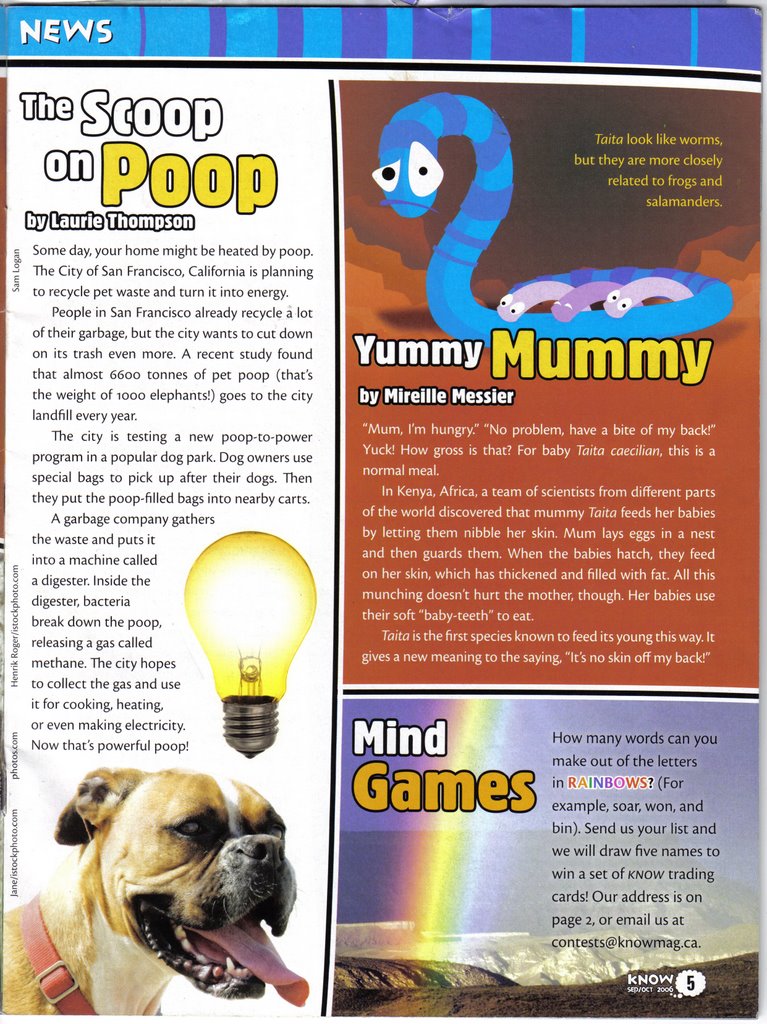
KNOW Magazine — Spot the spots


Sci­en­tists at ECOCEAN are using pat­tern-recog­ni­tion soft­ware devel­oped for NASA’s Hub­ble Space Tele­scope pro­gram to rec­og­nize indi­vid­ual whale sharks, which are cov­ered with small, white spots on a dark back­ground sim­i­lar to a star­ry night sky. I wrote a short news piece about it for the May/June 2007 issue of KNOW–The Sci­ence Mag­a­zine for Curi­ous Kids.

World’s Deadliest Catastrophe

On May 14th, the UN sought to remind peo­ple that the Con­go remains world’s dead­liest cat­a­stro­phe. The prob­lem is, who in the world even knows that 1,200 peo­ple are dying there every day, or that three months ago the Unit­ed Nations launched an appeal for $682 mil­lion to pro­vide the need­ed water, food, med­ical assis­tance, shel­ter and pro­tec­tion? Yes, we’re all dis­tract­ed. Yes, there are oth­er crises to tend to in Africa and else­where around the world. But let’s face it, there are coun­tries in the world who can, and should, step up. The peo­ple of the Con­go have suf­fered long enough.

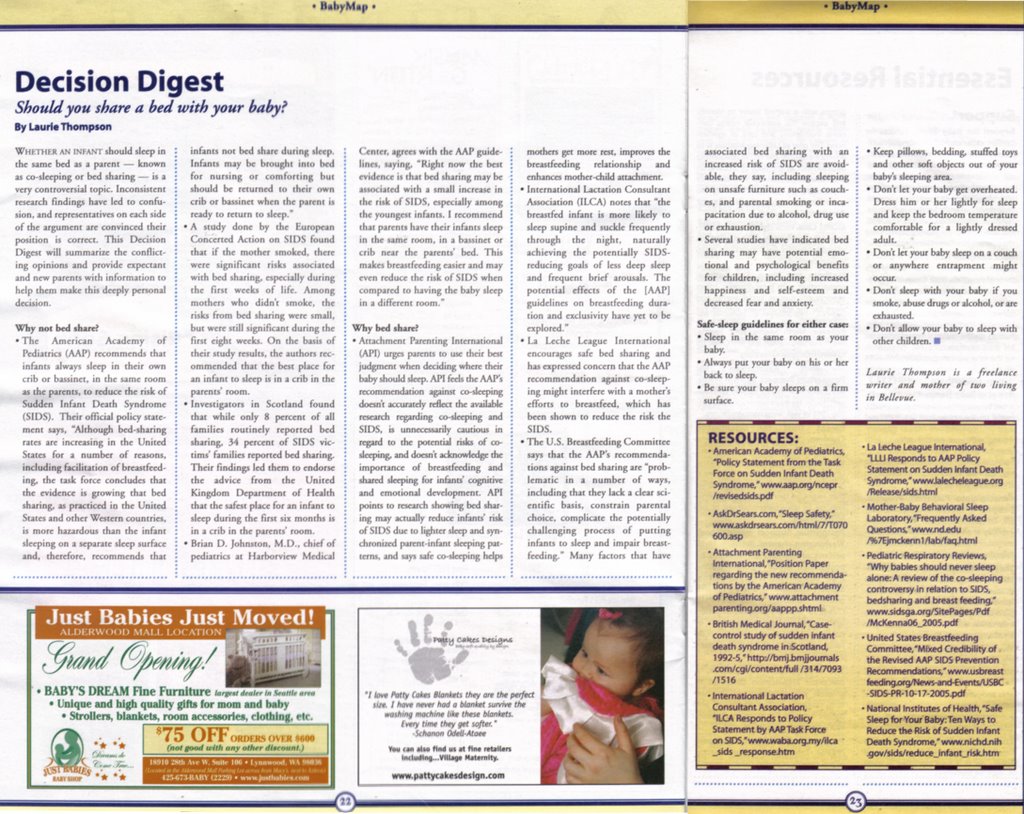
Hot topic — bed sharing

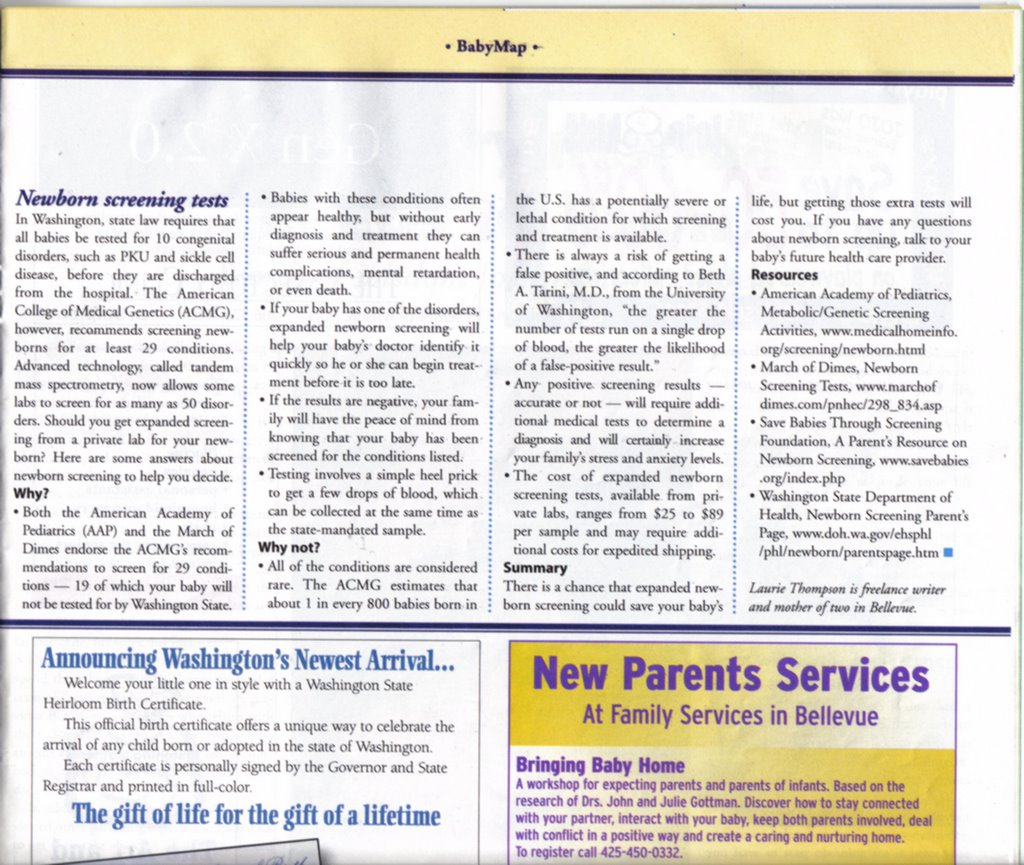
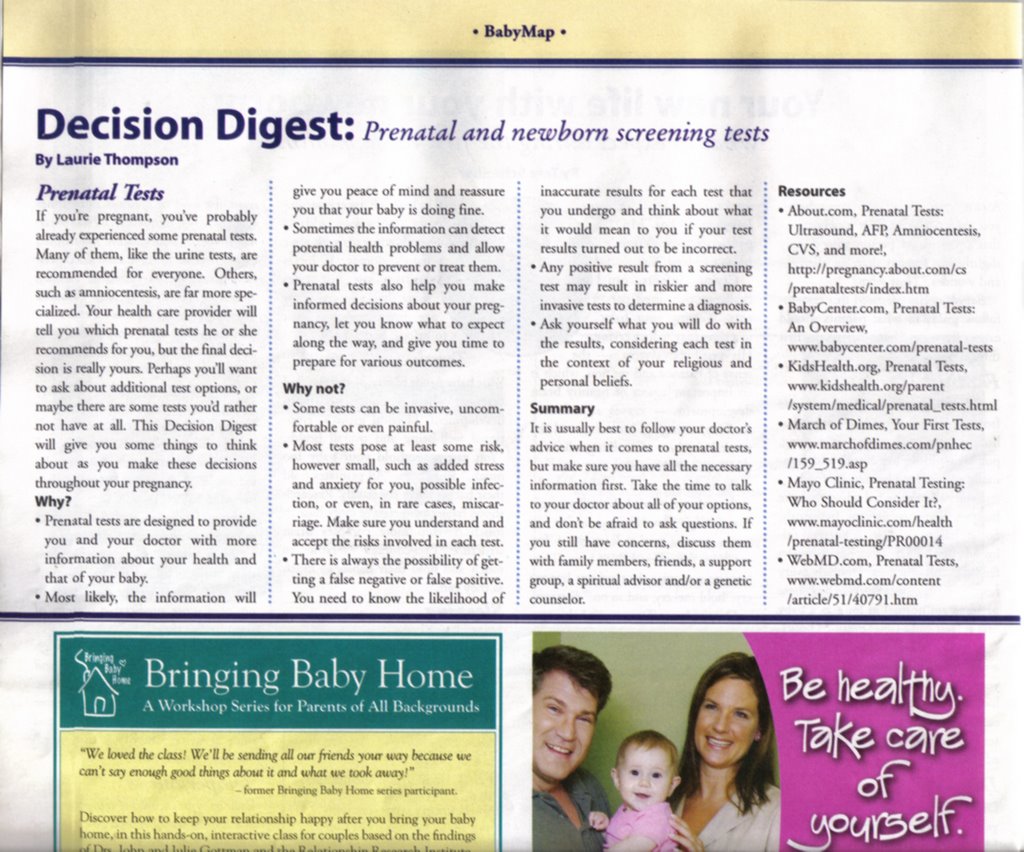
I enjoy doing these Deci­sion Digest columns for BabyMap because I get to explore both sides of a con­tro­ver­sial top­ic and then try to present an unbi­ased sum­ma­ry of all the pros and cons. So many of the ques­tions we encounter as par­ents don’t have a “right” answer. We gath­er all the (often con­flict­ing) infor­ma­tion we can, and then we have to just make the deci­sion that feels like the best fit for us. I hope this arti­cle will help par­ents feel good about their choice and their rea­sons for mak­ing it, what­ev­er they decide.

Should you share a bed with your baby?”, BabyMap, Spring/Summer 2006

Reducing birth defects benefits the entire population

Emmanuel Ofo­su Yeboah was born in Ghana with­out the tib­ia in his right leg, leav­ing it deformed and use­less. His father aban­doned him. His moth­er was told to kill him. That is just what it means to be dis­abled in Ghana.

For­tu­nate­ly, his moth­er was strong, and raised Yeboah to have high expec­ta­tions for him­self, even if nobody else did. In 2002, at the age of 25, he rode a donat­ed bicy­cle 360 miles across Ghana – with one leg – and showed his entire coun­try that the dis­abled could be very able indeed. His sto­ry became a movie that con­tin­ues to inspire.

When I heard Emmanuel’s sto­ry, I too was inspired by his incred­i­ble tri­umph. I was enraged by the plight of the dis­abled in Ghana. But even more, I won­dered what caus­es all those dis­abil­i­ties in the first place? Could they be pre­vent­ed, and if so, what effects would that have on Ghana­ian society?

The March of Dimes Glob­al Report on Birth Defects might offer some answers, and will hope­ful­ly spark some pos­i­tive change. Accord­ing to a March of Dimes press release about the report:

“…it is a com­mon mis­con­cep­tion that atten­tion to birth defects will draw fund­ing from oth­er pri­or­i­ty pub­lic health efforts — when, in fact, increased efforts to reduce birth defects in chil­dren con­tributes to the health of the entire population.

Expe­ri­ence from high-income coun­tries shows that over­all mor­tal­i­ty and dis­abil­i­ty from birth defects could be reduced by up to 70 per­cent if the rec­om­men­da­tions in this report were broad­ly implemented…

Among the inter­ven­tions that would have imme­di­ate impact are:

  1. folic acid sup­ple­men­ta­tion to pre­vent neur­al tube defects; 
  2. iod­i­na­tion of salt to pre­vent severe con­gen­i­tal hypothy­roidism; and 
  3. rubel­la immu­niza­tion to pre­vent con­gen­i­tal rubel­la syndrome.”

I think it’s a great place to start. If you agree, go to http://www.marchofdimes.com/howtohelp/howtohelp.asp.

NEWSLETTER
SIGN-UP